If you’re running a metal or aluminum foil operation, you’ve probably heard the word “tension” thrown around a ton—but let’s cut to the chase: a lot of folks new to foil slitting either underrate it entirely or think it’s just a vague buzzword to keep their lines from “wobbling.” As a foil slitting machine supplier who’s been on the floor troubleshooting, training operators, and fielding late-night panic calls for 12 years, I’m here to tell you tension is the unsung hero of clean, profitable slitting. Skip the textbook jargon for a sec—we’ll break this down like I’m chatting with a fellow line manager who’s pulled their hair out over a bad slit job. Foil Slitting Machine
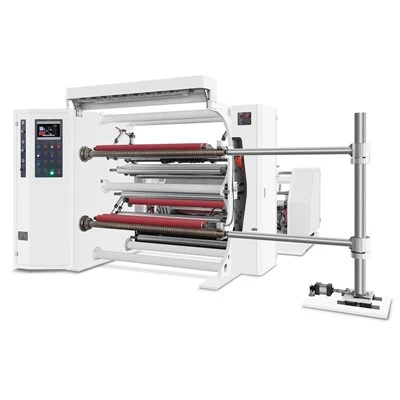
First, let’s define what we’re actually talking about here. Foil is thin—think 0.001 inch to 0.01 inch thick, depending on your stock. Tension is the consistent, controlled pull we apply to the foil as it moves through your slitting line: from the uncoiler (the big roll you load raw foil onto), through the slitter knives, and all the way to the rewinders (where you wind finished slit rolls). It’s not a one-size-fits-all number—adjust it wrong, and you’re throwing your entire run out the window before the first roll hits the rewind.
Let’s start with the biggest headache for every slitter: scrap. If tension is too low, the foil goes slack. When that slack hits the slitter knives, it doesn’t feed straight—instead, it bunches, skips, or even has a tiny fold that turns into a kink before you reach the first rewind. I’ve seen runs where an operator forgot to bump uncoiler tension up after switching from 0.005 inch aluminum to 0.002 inch food-grade foil, and 10,000 pounds of stock got tossed because every slit roll had a kink that made it unusable for packaging. Worse, slack foil can wrap around slitter knives or drift off-guide, which chokes the line—no production, no revenue, just you standing there staring at a pile of scrap.
Too high, though, and you’re fighting a different monster: breakage. Foil is brittle, especially thin food-grade or capacitor-grade stock. If tension cranks up to 15 pounds per inch (our go-to for heavy gauge foil) when you should be at 8, that thin 0.002 inch stock snaps mid-slit, leaving you to rethread the line instead of hitting your daily quota. We once had a customer who was new to our machines, set uncoiler tension 2x too high on a thin copper foil run, and broke the foil 7 times in a 20,000-pound run—costing him $2,000 in scrap alone and a full day of downtime.
Now, here’s the part that even experienced operators miss: tension isn’t just for keeping foil tight. It controls your slit roll’s shape, which is non-negotiable for downstream users. A customer who uses your slit foil for blister packs or battery electrodes can’t have a roll that’s loose and wobbly—it’ll jam on their forming machine. Or worse, if tension is unbalanced across the rewinders, one side of the roll will be tighter than the other, leading to “telescoping” (the roll skewing like a slanted beer can on a shelf). I’ve had electronics clients send back entire shipments of slit foil because their rolls telescoped, and the edges got crumpled during manufacturing. That’s the kind of quality fail that makes buyers switch suppliers—and if you’re the one slitting the foil, that’s on you.
Wait, let’s get specific about how tension interacts with the slitting process itself. The slitter knives—whether they’re circular shear knives (the most common for foil) or razor knives—need a consistent, flat foil surface to cut cleanly. If tension dips, the foil drifts, and the knives won’t make a uniform cut. You’ll get feathered edges (those tiny, ragged bits along the slit edge) or even overlapping cuts if the foil shifts side to side. For packaging foil, feathered edges can tear when folded into a bag, so your client is right back to you with complaints. For electrical foil, uneven edges mean the foil can short out in batteries—huge safety issue there.
We also work with a lot of converter clients who slit foil into ultra-narrow strips—think ¼ inch wide for batteries or labels. That’s where tension becomes even more critical. Narrow strips are way more prone to drifting; a tiny tension imbalance of ½ pound across two adjacent rewinders can make one strip shift sideways, and before you know it, you’re throwing 50% of your narrow strips into scrap. I’ve trained operators on our slitting machines to use a tension feedback system (we build these into every machine we sell) that automatically adjusts rewind tension to within 0.1 pounds across all slitting positions. That single feature cut one customer’s scrap rate for narrow battery strips from 12% to 3% in their first run with our machine. That’s the difference between losing money on every run and hitting their profit targets.
Another underdiscussed point: tension affects your machine’s wear and tear. If uncoiler tension is too low, the loose foil can slip and rub against machine parts, causing scratches on the foil surface that ruin it for cosmetic uses. If tension is too high, you’re putting extra stress on the uncoiler’s bearings, slitter shafts, and rewinders. We’ve had customers with older, low-end slitting machines that skipped tension monitoring—they had to replace a rewind motor every 18 months, while our customers using our machines’ tension controls go 5+ years without major motor or shaft repairs. That’s a hidden cost a lot of folks don’t factor in when buying a slitter.
Let’s talk about different foil types, because tension isn’t a one-size-fits-all number. Food-grade aluminum foil is thin, flexible, and often coated—so it needs lower, more consistent tension (usually 6-10 lb/in). Copper foil for electronics is a bit stiffer, so we recommend 10-15 lb/in. Heavy gauge aluminum for industrial insulation? 15-20 lb/in. If you’re slitting coated foil, you have to dial tension back even more—too much pull will stretch the coating, making it peel off during slitting. We had a snack packaging converter who tried to run coated foil on a machine without adjustable tension zones, and 30% of the runs had peeling coating. They swapped to our machine with zone-specific tension controls, and that scrap rate dropped to under 1%.
A common mistake I see new operators make: thinking they just set tension once at the start of a run and leave it. That’s a recipe for disaster. As the uncoiler’s roll gets smaller (as it’s fed into the line), its diameter changes—so you have to adjust uncoiler tension to keep pull consistent. If you forget to do that, tension will spike as the roll shrinks, leading to breakage. Same with rewinders: as the finished slit roll gets bigger, the required tension changes. Our machines have automatic tension profiling that adjusts pull based on roll diameter, so operators don’t have to tweak numbers every 10 minutes. That’s the kind of small feature that makes a huge difference in uptime and quality.
Now, let’s wrap this up from a supplier’s point of view. At the end of the day, tension isn’t just a “setting”—it’s the backbone of a good slitting job. Too low, you get scrap, downtime, and bad rolls. Too high, you get broken stock, machine wear, and even safety hazards (snapped foil can whip back and hit an operator if tension’s cranked too high). The right tension, controlled consistently across every stage of the line, means less scrap, higher quality rolls, and happier customers who’ll keep coming back to you.
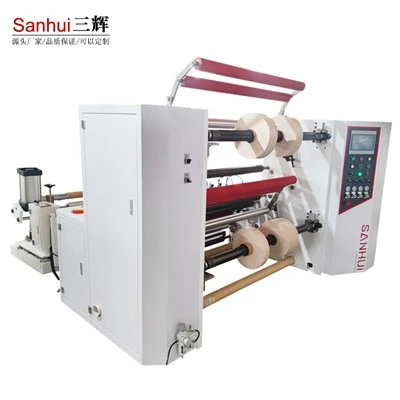
If your current slitting machine is giving you issues with kinks, telescoping, excessive scrap, or downtime from foil breaks—let’s chat. I’ve helped hundreds of converters dial in their tension settings and upgrade their lines to fix those headaches. We can walk through your specific foil types, run sizes, and goals to show you how a machine with proper tension controls will boost your bottom line. Don’t let bad tension be the reason you’re leaving money on the table every run.
Film Slitter Rewinder References
Foil Slitting: Principles and Practices (2nd Edition)
Modern Converting Technology Journal, Volume 37, Issue 4
Aluminum Association Technical Bulletin T-103: Slitting and Processing Aluminum Foil
Electrical Foils Manufacturing Handbook, Industry Safety and Standards Board
Wenzhou Sanhui Machinery Manufacturing Co., Ltd.
Wenzhou Sanhui Machinery Manufacturing Co., Ltd. is one of the most professional foil slitting machine manufacturers and suppliers in China. We have world-leading production equipment and strong manufacturing capabilities. Please feel free to wholesale advanced foil slitting machine made in China here from our factory. Customized orders are welcome.
Address: B17-8, Mechanical Industry Park, Wanquan Light Industry Production Base, Wanquan Town, Pingyang County, Wenzhou City, Zhejiang Province
E-mail: sanhui.slittingmachine@gmail.com
WebSite: https://www.sanhuislittingmachine.com/
