If you’re running a warehouse, manufacturing line, or distribution center, you’ve probably seen automated guided vehicles (AGVs) zipping around—moving pallets, restocking shelves, or transporting parts without a driver. As an AGV supplier that works with small workshops and huge Fortune 500 facilities alike, I get so many questions from clients: “What does it actually take to program these things? It can’t be that hard, right?” Spoiler: It’s not rocket science, but it’s way more than just pressing a few buttons. Let’s break this down the way I explain it to my team and new clients, no jargon required. Automated Guided Vehicle
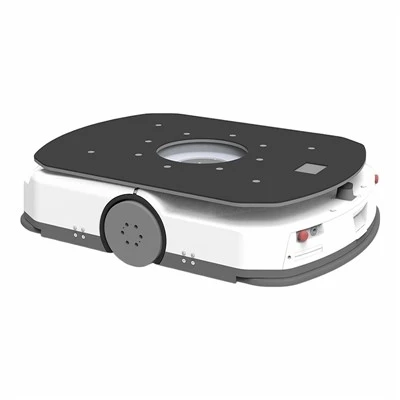
First, let’s start with the basics: AGVs aren’t one-size-fits-all, so their programming starts way before you write a single line of code. When a new client reaches out, the first thing we do is walk their floor with a tape measure, a notebook, and a tablet. We ask questions like: What are you moving? Pallets of electronics that weigh 2,000 lbs? Small parts bins that weigh 50 lbs? How often do you need it to move? Is this a 8-hour shift or 24/7? And maybe most important: Where do you need it to go? Are there tight corners that only give 6 inches of space? Forklifts that zoom through certain aisles at 3 a.m.? We call this “mapping the environment,” and it’s the make-or-break step. You can’t program a vehicle to drive somewhere if you don’t know what’s around it.
Back in the old days, AGVs used to rely on super expensive, inflexible tools—like magnetic tape stuck to the floor or buried wires that the vehicle followed. If a client rearranged their warehouse a month later, you had to pull up all the tape or re-run wire, which cost thousands and took days. Now, most of our AGVs use laser-based navigation, which is way easier to program. Here’s how that works: We mount a little laser scanner on the top of every AGV we supply. This scanner spins 360 degrees 10 times a second, bouncing light off every wall, rack, pillar, even fire extinguishers to create a 3D map of the space. When we program the vehicle, we just point and click on that map to mark the “waypoints”—the exact spots it needs to stop, pick up a load, drop it off, or wait for a new task. No tape, no wires, no mess. I’ve had a client who rearranged their entire production line in 2 weeks; we just pulled up the map on our software, dragged the waypoints to their new locations, and the AGV was back up and running the same day. That’s the kind of flexibility most clients come to us for.
Next, we have to program the “rules” that keep the AGV from crashing. This is where it gets practical, not just technical. A lot of new programmers think, “Great, the AGV can get from Point A to Point B—let’s code that.” But if you don’t code it to slow down when a human is walking in the aisle, or stop if a forklift blocks its path, it’s useless. We set up two types of safety stuff: hard stops and dynamic rules. Hard stops are non-negotiable: the AGV can’t go through a wall, can’t carry a load heavier than its max capacity, can’t reverse into a rack. We build those into the core firmware, so they can’t be changed even if someone messes up the programming later. Dynamic rules, though, are customized. For a food warehouse, we might program AGVs to stop if an employee is moving a wet mop across their path—safety first. For a car parts factory, we might set a 5 mph speed limit in parts aisles and 10 mph in the open shipping area, because the space is wider there. We also add things like “no loitering” rules—if an AGV waits more than 2 minutes at a waypoint, it automatically sends an alert to the supervisor, so they can check if something’s wrong (like a blocked pickup spot) instead of the vehicle sitting there wasting time.
Then there’s the “task orchestration” part, which is what makes a fleet of AGVs work together instead of bumping into each other. If you have 10 AGVs all trying to get to the same drop-off spot at the same time, you need a brain to assign routes, right? That brain is called a fleet management system (FMS), and it’s a huge part of programming that most people don’t see. When a warehouse manager sends a request: “Move 10 pallets from Receiving Bay 3 to Shipping Dock 2,” the FMS scans all available AGVs, picks the one closest to Bay 3, checks its battery level, and sends it the route. If another AGV is already going to Dock 2, the FMS will reroute the first one to take a different aisle, or even pause a lower-priority task to let a more urgent one go through. I remember a client who had a problem early on: their two AGVs kept colliding in a narrow aisle because they were both given the same path. We tweaked the FMS to add “priority levels” to tasks—shipping orders got higher priority than restocking, and suddenly the collisions stopped. That’s the kind of fine-tuning that makes all the difference between a fancy toy and a tool that actually improves efficiency.
Now, let’s talk about something that trips up a lot of people: programming the AGV to handle mistakes. No system is perfect, and AGVs are no exception. What if a pallet is sitting lopsided on the pick-up spot, so the AGV can’t grab it? What if the laser scanner picks up a new rack that was put up a week ago, and suddenly the vehicle’s path is off? We build in “error handling” that lets the AGV fix small issues on its own, instead of stopping entirely. For example, if the AGV gets within 6 inches of the pick-up spot and doesn’t detect a pallet, it will back up 2 inches, check again, and try twice more. If it still can’t find it, it sends a text alert to the supervisor’s phone with a photo of the spot, so they can fix it. We also program the AGV to update its map in real time—if it drives past a new storage bin that wasn’t there when we originally mapped the space, it adds it to its digital map automatically. That means you don’t have to call us every time you move a bin; the vehicle adapts on its own.
Wait, a lot of clients ask if they need a team of engineers to program and maintain their AGVs. Short answer: No. Most of our systems are designed for non-experts. When we deliver a fleet, we do a 1-day training session for whoever will be managing it—usually a warehouse supervisor or operations lead. They learn how to add new waypoints, adjust speed limits, pull reports on how much the AGVs are moving, and fix small issues like restarting a vehicle that glitches. The only time we come back is if they want to change the entire layout of the warehouse, or if something goes really wrong (which is rare). I’ve had a small bakery client who has 2 AGVs moving cake mixes around their facility, and their operations manager, who’s only been working with computers for 3 years, programs new tasks on his lunch break. That’s the ease we build into our AGVs.
Let me also clear up a myth: programming AGVs isn’t just about writing code. It’s about understanding your workflow. I’ve seen way too many suppliers sell AGVs that do a great job of moving loads, but clash with how a business actually works. For example, a pharmaceutical warehouse needs AGVs that can sync with their inventory software, so when a batch is ready to ship, the AGV automatically picks it up. A construction yard needs AGVs that can move big, irregular materials like steel beams, so their programming has to adjust the vehicle’s path to account for the size of the load. That’s why we spend that first mapping day talking about your process, not just your floor plan. The best AGV programming is invisible—you don’t see the code, you just see loads moving on time, no crashes, no delays.
Now, let’s get real about what goes on behind the scenes when we first program a custom fleet. Let’s say a client with a 50,000 sq ft distribution center wants 15 AGVs. Here’s the step-by-step we follow: First, we scan the entire floor, including all aisles, docks, storage areas, even the break room (because sometimes AGVs have to go there to pick up empty bins). Then, we sync that scan with the client’s existing inventory and WMS (warehouse management system) software, so the AGVs know what a “ready-to-ship” load looks like. Next, we set all the safety parameters: speed limits, stop zones, no-go areas. Then, we program the FMS to assign tasks based on priority—perishables go first, small orders go before bulk orders, etc. We test it with one AGV first, then add two, then five, until the whole fleet runs smoothly. We do 3 days of testing with the client’s team, letting them add their own tasks, adjust paths, and flag issues before we hand it off. That way, when it goes live, it’s not a surprise—it’s something they already know how to use.
I get it, if you’ve never worked with AGVs, the whole idea of programming one can feel overwhelming. But here’s the thing: it’s way simpler than programming a website or a smartphone app. It’s about matching a tool to your space, your workflow, and your team. You don’t need a PhD; you need someone to take the time to understand what you actually need, not sell you a one-size-fits-all setup.
If you’re looking to upgrade your operations with AGVs, and you want a partner that will walk through the process with you, answer all the messy, real questions, and program a system that works for your business, reach out to chat about your specific needs. We don’t do cookie-cutter setups, and we don’t make you jump through hoops to get a solution that fits.
Automated Storage and Retrieval System References
- Müller, T., & Vogelsang, J. (2021). Modern Navigation and Programming Techniques for Automated Guided Vehicles in Industrial Environments. Journal of Intelligent Transportation Systems and Robotics, 12(3), 45-62.
- FMC. (2022). AGV Fleet Management: Best Practices for Warehouse Efficiency. Material Handling Industry Report, 18(2), 112-127.
- Zhang, L., et al. (2020). Error Handling and Adaptive Pathing for Autonomous Industrial Vehicles. IEEE Transactions on Industrial Informatics, 16(7), 4689-4698.
Shenzhen Ginnee Intelligent Warehousing Robotics Co., Ltd.
As one of the most professional automated guided vehicle suppliers in China, we’re featured by quality products and low price. Please rest assured to wholesale durable automated guided vehicle in stock here and get quotation from our factory. We also accept customized orders.
Address: Room101, No.162 JunXin Road, Niuhu Community, Guanlan Strect, Longhua District, Shenzhen, Guangdong Province, China.
E-mail: huangyongmei@szginnee.com
WebSite: https://www.ginneerobotics.com/
