If you’re in the market for valve components, you’ve probably heard the term “nickel-based alloys” thrown around a lot. I’m Jake, and I’ve been running a valve components supplier for 12 years now—we don’t just stock off-the-shelf parts; we build custom solutions for industries that can’t afford a single part failure, like oil and gas, chemical processing, and power generation. Over that time, I’ve seen first-hand how nickel alloys aren’t just a “nice upgrade” over steel or brass—they’re a non-negotiable for tough environments. Let me break down their key properties, why they matter for valve components, and how we leverage these traits to build parts that last. Valve Components

First, let’s get one thing straight: nickel-based alloys aren’t just pure nickel with a few add-ins. They’re engineered with nickel as the base (that means it makes up over 50% of the metal’s composition) plus elements like chromium, molybdenum, copper, or titanium, depending on what job the valve needs to do. For example, Inconel 625 is a go-to for high-heat stuff, while Monel 400 works great for corrosive seawater applications. But the core properties that make these alloys perfect for valves boil down to four big ones: corrosion resistance, high-temp strength, weldability (super important for custom valves), and fatigue resistance. Let’s dive into each, because I see guys every week underestimating how these play out in real-world use.
Corrosion resistance is the biggest win for nickel alloy valves. Regular steel rusts fast when it touches saltwater, acids, or chemical fumes—we’ve had customers come to us with steel valves that corroded so bad, they broke mid-shutdown, costing them hundreds of thousands in downtime. Nickel changes that. Chromium is often added to nickel alloys to form a thin, invisible oxide layer on the surface—this layer seals the metal from oxygen and corrosive stuff, so it doesn’t pit or corrode. But here’s the kicker: that layer doesn’t break down easily like it does in stainless steel (which is also chromium-based, but not nickel-dominant). In environments with harsh acids, like hydrochloric or sulfuric acid, nickel alloys hold up where 316 stainless steel would dissolve in months. We supply a lot of valves for chemical plants that pump acidic solvents—our nickel alloy parts have lasted 3x longer than their old stainless ones, no exaggeration. Even for sour oil and gas, which has that nasty H2S (hydrogen sulfide) that makes steel crack, nickel alloys like C-276 are immune to stress corrosion cracking—something steel can’t handle, no matter how much you coat it.
Next up: high-temperature strength. Valves in power plants, aerospace, or refineries operate at temps way higher than what steel can handle. Carbon steel starts to lose its structural strength around 400°C (750°F)—it gets soft, can’t hold pressure, and risks blowing out. Nickel alloys, though, keep their strength even when temps hit 1000°C (1800°F) or more. Why? Nickel has a face-centered cubic crystal structure, which is way more stable at high temps than the body-centered structure of steel. That means the metal’s atoms don’t slide apart easily, so the valve keeps its shape and pressure rating. We recently did a custom valve for a natural gas turbine that runs at 850°C—our Inconel 718 part didn’t show any deformation after 2 years of operation, while the previous supplier’s steel valve warped so bad it wouldn’t seal anymore. For valves that are part of high-heat systems, this is non-negotiable—you can’t afford a valve that expands too much or weakens mid-cycle.
Then there’s weldability, which is where a lot of people go wrong. A valve isn’t a single piece of metal—it’s a body, a stem, a disc, a seat, all welded or machined together. If an alloy is too brittle or hard, welding it leads to cracks, and a cracked valve is a disaster. Nickel alloys, when formulated right, have excellent weldability. We use MIG and TIG welding for most of our parts, and the nickel base means the weld pool stays consistent, no porosity or cracks that would leak. Wait, but not all nickel alloys are equal here—some, like Hastelloy X, are super easy to weld, while others need preheating to avoid brittleness. That’s where our team’s expertise comes in. We don’t just pick an alloy out of a catalog—we test weldability for each custom order. Last quarter, a customer needed a valve for a chemical reactor that required welding thin-gauge nickel alloy to a steel flange; we matched the filler metal to the alloy, did a pressure test after welding, and it passed with zero leaks. Too many suppliers skip that step, and their customers end up with weld failures down the line.
Fatigue resistance is another unsung hero. Valves cycle hundreds or thousands of times a day—opening, closing, throttling. Over time, even small pressure spikes or temperature changes can cause metal to fatigue, crack, and fail. Nickel alloys have way higher fatigue strength than steel, especially under cyclic loading and thermal stress. Let’s say a valve is operating in a system where temps swing from 20°C to 600°C every hour—each cycle expands and contracts the metal. Nickel alloys can handle that repeated stress without developing microcracks, while steel would crack after a few hundred cycles. We have a customer in a desalination plant that uses our nickel alloy valves for the intake lines—they cycle 500 times a day, and the valves have run for 5 years without any fatigue-related issues. The old steel valves they used would crack and leak every 6 months.
Now, I know what some of you are thinking: “Nickel alloys are pricey, right? Why should I pay more?” Let’s be real upfront—nickel alloys cost more upfront than regular steel or brass. But here’s the math: a steel valve might cost $50, but it fails every 6 months, costing you $10k in downtime and replacement fees. A nickel alloy valve costs $300, lasts 10 years, no downtime. That’s a no-brainer. I’ve seen customers fight the price at first, then come back 6 months later asking for more because their old parts died. It’s a long-term investment, not a quick purchase.
But let’s talk about the different types of nickel alloys we use, because not all are the same, and matching the right one to your valve’s job is key. Monel 400 is great for seawater and alkaline environments—It’s a mix of nickel and copper, so it resists salt corrosion way better than stainless. Inconel 625 is workhorse for high-heat and general corrosion—it’s used in refineries, aerospace, and even marine engines. Hastelloy C-276 is the go-to for the harshest chemicals—sulfuric acid, hydrochloric acid, that stuff that eats steel. And for really high-stress, high-heat parts like valve stems, Inconel 718 is perfect—it’s got that great strength at temp and welds like a dream. Our team works with every one of these, and we can help you pick the right one based on your operating conditions, no guesswork.
Another thing: machining properties. Nickel alloys are harder than mild steel, so machining them takes a bit more care, but it’s not impossible. We have 5-axis CNC machines that are set up specifically for nickel alloys—we use the right tools (carbide inserts, not high-speed steel) and the right speeds to avoid work-hardening. Work-hardening is when the metal gets harder as you machine it, which can crack the part if you rush it. We’ve refined our process over the years, so we can machine even complex valve parts (like multi-turn stems or precision seats) without any defects. That’s why our valves fit so tight—no leaks, no gaps, because we get the machining right.
Wait, let’s address a common misconception: nickel alloys are heavy. Yeah, they’re denser than steel, so a valve body might be a bit heavier, but for most applications, that’s not a problem. The tradeoff for longer life and better performance is totally worth it. Plus, we can adjust designs to keep weight down where it matters—like using thinner walls in parts that don’t need extra thickness, or hollow stems where possible. We don’t just copy-paste a standard part; we tweak designs to balance performance and weight for each customer’s needs.
Now, how do we test our nickel alloy valve components? We don’t just build them and ship them. Every part goes through pressure testing (hydrostatic, up to 1.5x the rated pressure), leak testing (bubbler or mass spec, depending on the size), and for high-temp parts, we do thermal cycling tests to make sure they hold up under real operating conditions. We also send samples to third-party labs for corrosion and strength testing, if a customer wants it. Last year, a customer in the pharmaceutical industry needed a valve that met FDA standards—we had the alloy tested for purity, and it passed, so we could supply them with a part that was safe for food-grade processing. That level of quality control is why we’ve stayed in business this long.
I’ve been in this game long enough to know that the biggest mistake people make when buying valve components is focusing on price instead of performance. A nickel alloy valve might cost more upfront, but the downtime savings, less maintenance, and longer lifespan add up way more. I’ve seen small refineries shut down for 3 days because a cheap steel valve failed—cost them over $100k in lost production. That’s way more than the difference between a $50 steel valve and a $300 nickel one.
If you’re dealing with a tough environment—corrosive chemicals, high heat, cyclic pressure, sour gas—nickel-based alloy valves are the way to go. We’ve built parts for every industry you can think of, from offshore oil rigs to food processing plants to power grids. Our team knows how to tailor nickel alloy properties to your specific valve needs, so you don’t have to settle for a one-size-fits-all part.
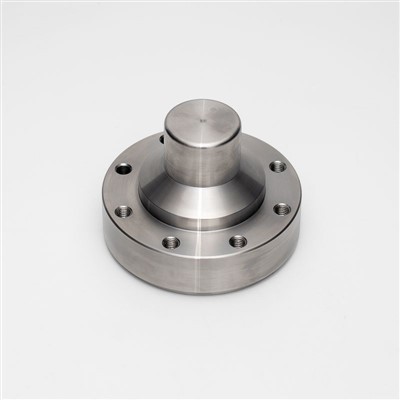
If you’re tired of valve failures, downtime, and constant replacements, reach out to us to discuss your requirements. We can send you samples, walk you through the different alloy options, and give you a quote that makes sense for your budget. Don’t wait for a valve to fail and cost you thousands—invest in a part that lasts.
Valve Components References
- NASA. (2021). Nickel-Based Alloys for High-Temperature Applications. National Aeronautics and Space Administration.
- ASM International. (2018). Corrosion Resistance of Nickel Alloys. ASM Handbook, Volume 13A: Corrosion: Fundamentals, Testing, and Protection.
- The Minerals, Metals & Materials Society. (2020). Machining and Welding of Nickel-Based Alloys. Journal of Manufacturing Processes.
- Valve Manufacturers Association. (2019). Selection Guidelines for Nickel Alloy Valve Components. VMA Standards Committee.
Taizhou Liuhuan Machinery Co., Ltd.
As one of the most professional valve components manufacturers and suppliers in China, we’re featured by quality products and good service. Please rest assured to buy customized valve components made in China here from our factory. For quotation, contact us now.
Address: Xinyuan Industrial Zone, Damaiyu Street, Yuhuan City, Zhejiang Province,China
E-mail: tzlhmachining@gmail.com
WebSite: https://www.tzlhmachining.com/
