Hey everyone, thanks for stopping by. I’m stoked to talk about a question I get ALL the time now that I’m a supplier for lithium-ion battery special adhesive tapes—can these tapes actually pull off in batteries with weird, complex shapes? Let’s cut to the chase: if you’ve ever messed with a phone with a bulging battery, or a laptop that’s too tight, or even that fancy power tool with the curved battery pack, you’ve probably ran into shape headaches. That’s exactly where this question matters most. Lithium‑ion Battery Special Adhesive Tapes
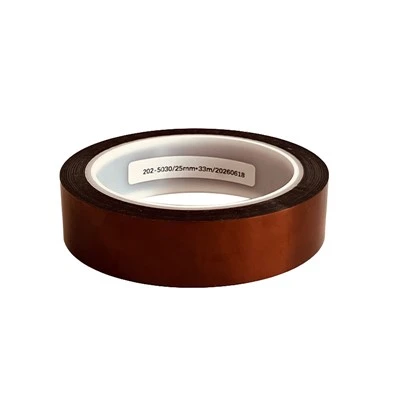
First, let’s get one thing straight—when folks say “complex shapes” for batteries, they’re not talking about the boring, blocky AA or AAA packs from your grandpa’s old flashlight (though even those can have edge quirks). We’re talking about stuff like the curved battery packs in wireless earbud charging cases (those little swoopy ones), the contoured battery modules in electric vehicle (EV) undercarriages that have to fit around frame parts, the irregular pouch cells in medical wearables like glucose monitors, or even the weird, twisted battery packs for drones that need to be lightweight and aerodynamic. Most standard tapes won’t touch these, right? They’re rigid, cut straight as a ruler, and crack if you bend ’em even a little. But our special tapes? That’s their whole gig.
Let me break down the science without making your eyes glaze over. I know when I first got into this, I thought “adhesive tape is just glue on plastic”—nope, totally wrong. The base film we use for these tapes isn’t that flimsy Mylar you buy at the dollar store. It’s a flexible, cross-linked polyolefin or acrylic film engineered to stretch, bend, and hold its shape without tearing or losing integrity. We don’t just slap adhesive on it—we use a custom acrylic adhesive that’s not too runny, not too sticky to where it leaves residue, and it’s got something called “conformability” built in. That’s the secret sauce here—conformability is the ability to press into tiny grooves, curves, or uneven spots on a complex battery shape, no gaps, no air bubbles (those are the enemy in batteries, by the way—they cause hot spots and early failure).
Wait, let’s talk about a real-world example that’s been blowing up lately: EV battery modules. A lot of new EVs aren’t using those big rectangle battery packs anymore; they’re making frame-integrated packs that have to contour around the car’s chassis, suspension parts, even the fuel tank in some hybrids. Last year, we hooked up with a mid-sized EV startup that was struggling with a pouch cell module they couldn’t hold down. Their old tape was rigid, so when the pack bent slightly during a test crash, the tape split, the cells shifted, and they got a short circuit test fail. We sent over our high-conformability battery structural tapes, and the testing team was shocked—they ran the pack through 1,000 vibration cycles, 200 thermal cycles (from -40°F to 180°F, that’s brutal), and the tape didn’t crack, the bond didn’t fail, and the cells stayed perfectly aligned. That’s the kind of win that makes this job worth it.
But it’s not just big EV stuff—medical wearables are huge too. Think about a continuous glucose monitor (CGM) that sticks to your arm—its battery is tiny, curved, and has to hold tight through sweat, showering, and daily movement. The adhesive here can’t be harsh on skin, but also can’t fall off. Our medical-grade lithium-ion battery tapes work here because they conform to the curve of the CGM’s battery, creating a seal that keeps moisture out (moisture is a huge cause of battery degradation) and holds the device in place for the 10-day wear period CGMs are designed for. I talked to a rep from a CGM maker last month who said they’d been switching from a different tape that would peel at the edges after a week—our tape fixed that. What’s cool here is this isn’t just about shape; it’s about combining conformability with the right adhesive chemistry for the use case.
Wait, let’s address the pushback some people have. I’ve had engineers say, “If it’s so flexible, does it lose structural strength? Doesn’t that matter for battery integrity?” Fair point. Battery tapes do two main jobs: hold components together (like cells to modules, or modules to the pack frame) and insulate or seal against moisture, dust, or temperature. Our tapes are engineered to have tensile strength that’s actually higher than standard rigid tapes, even when bent. We do a test where we take a tape, wrap it around a 2mm diameter rod (that’s like the thickness of a pencil lead), and stretch it to 150% of its original length—no cracking, no delamination from the film or adhesive. That’s a key test for complex shapes, because a battery that fits around a small component has to bend tight without breaking.
Another test: what about when the shape has sharp edges? Like, if a battery has a stamped metal terminal that’s got a 90-degree bend, that edge can slice through standard tape. Our tapes have a film that’s tear-resistant—we use a cross-linked process so it doesn’t snap or tear against sharp points. We had a customer with a drone battery that had jagged cut edges on the casing; their old tape would tear every time they assembled 10 units, slowing down production. Our tape? They’re now putting out 500 units a day without a single tear related to edge sharpness. That’s a production win, not just a performance win.
Now, let’s get into why a lot of suppliers still get this wrong. They take a standard flexible tape, slap a “battery” label on it, and call it a day. But lithium-ion batteries have unique requirements—they can’t be exposed to things like silicone (which can contaminate the electrolyte), and the adhesive has to be flame-retardant, right? If a battery overheats, the tape can’t catch fire. Our special tapes are formulated to be UL 94 V-0 rated, which is the highest flame resistance rating for plastics. That’s non-negotiable, especially for complex shapes where a gap in the tape can lead to a hot spot that starts a fire.
Wait, let’s talk about customization, too. Because complex shapes aren’t one-size-fits-all. Some batteries have micro-grooves for cooling, some have large curved surfaces, some have multiple small protrusions that need to be secured. We don’t just sell off-the-shelf rolls—we work with customers to die-cut the tape into exactly the shape they need. Last quarter, we had a customer with a portable air compressor battery that had 3 tiny, irregularly shaped protrusions they needed to secure to the main module. We die-cut our conformable tape into 3 matching small pads, and they were able to apply them in one step instead of cutting three separate pieces of tape (which leads to human error and gaps). That’s the other side of this—conformability isn’t just about the tape bending, it’s about the tape being able to be cut to fit weird shapes without compromising its performance.
I should also mention testing, because that’s what separates a good tape from a great one. We don’t just test our tapes in a lab—we test them in real-life conditions that match what our customers are dealing with. For example, the EV startup I told you about earlier didn’t just do standard thermal cycle tests; they also simulated the road conditions their customers would face, with constant vibration from potholes, temperature swings in the desert, and high humidity in coastal areas. Our tape passed all of it, and they’ve since placed a repeat order for 20,000 linear meters for their new model. The medical device customer does accelerated aging tests—they leave the tape on a CGM battery at high temperature for 6 months to simulate 2 years of use, and the bond strength stays above 12 N/25mm, which is the industry minimum. That’s the stuff that matters when you’re dealing with complex shapes—you need the tape to perform, not just look like it will.
Wait, let’s make sure we’re not overstating this. There are limits, right? If a shape is so twisty that the tape has to stretch beyond 200% of its length, even our tape will start to lose strength. But for 90% of the complex shapes battery makers are dealing with now—curved pouch cells, contoured modules, irregular wearables, frame-integrated EV packs—our tapes are more than enough. I’ve had a few customers come to me and say, “We thought complex shapes would mean we have to redesign the whole battery pack to use standard parts,” and that’s when I let them test our tape. Almost every time, they don’t need to redesign anything—they just switch the tape. That saves them time, money, and R&D headaches.
Let me circle back to the original question: can lithium-ion battery special adhesive tapes be used in batteries with complex shapes? The short answer is a resounding YES—if you’re using the right kind of tape, not just any flexible tape. The key is conformability, custom die-cutting, and the right chemical formulation that’s both strong enough for structural bonding and flexible enough to fit weird curves, edges, and grooves. The old way of using rigid tapes for blocky batteries is dead; the future of batteries—EVs, wearables, drones, medical devices—all use complex shapes, and our tapes are made exactly for that.
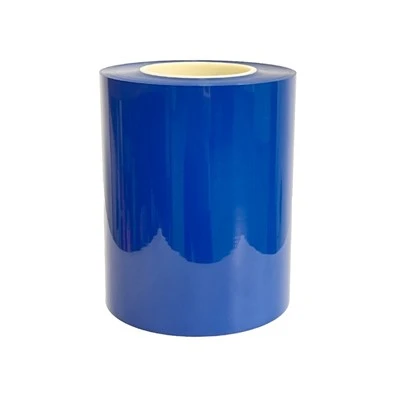
If you’re a battery engineer, a production manager, or someone dealing with a tricky battery shape that’s giving you tape headaches, I’m here to help. We can send you free samples, run custom tests for your specific application, and work with you to get the right tape that fits your shape and performance needs. No one-size-fits-all garbage here—we tailor every solution to your problem. Reach out whenever you’re ready to chat through what you’re working on.
Double Sided Tapes References
- Battery Technology, 2022, "Conformable Adhesive Tapes for Complex Lithium-Ion Battery Packs"
- UL 94 Standard for Safety of Flammability of Plastic Materials for Parts in Devices and Appliances, 2021
- Journal of Power Sources, 2023, "Mechanical Integrity of Adhesive Bonds in Thermally Cycled Lithium-Ion Batteries with Complex Geometries"
- Society of Automotive Engineers (SAE) International, 2022, "Performance Requirements for Adhesive Tapes in EV Battery Modules"
Jiangsu Jinjiayi Electronic New Materials Co., Ltd.
With abundant experience, we are one of the most reliable lithium‑ion battery special adhesive tapes manufacturers and suppliers in China. We warmly welcome you to buy bulk lithium‑ion battery special adhesive tapes in stock here and get quotation from our factory. Customized orders are welcome.
Address: No. 3 Taihu West Road, Changshu-Sihong Industrial Park, Sihong County, Jiangsu Province
E-mail: cshxdz@163.com
WebSite: https://www.jjyelec.com/
