If you’ve ever walked past a residential construction site, or stared at a pile of piping in a plumbing supply warehouse, you’ve likely spotted U-PVC—unplasticized polyvinyl chloride—everyday workhorse of modern plumbing, irrigation, and drainage systems. But if you’ve looked closely at those neat little cylindrical pieces with notches or ridges on each end, you might have wondered: what exactly is a U-PVC coupling, and why does it matter more than just a random plastic connector? As a U-PVC fittings supplier with 12 years on the trade, I’ve fielded this question from plumbers fixing a leaky basement drain, to landscapers installing a drip irrigation line, even to engineers specifying materials for a new municipal wastewater project. Today, I’m breaking down the purpose of a U-PVC coupling—no jargon, no fluff, just the real, practical work these parts do, and why choosing the right one matters far more than you might think. U-PVC Fittings
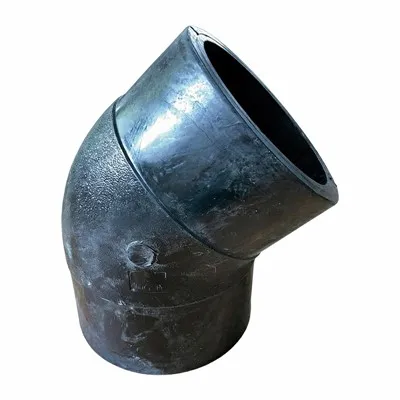
First, let’s get one basic fact straight: a U-PVC coupling isn’t just a “joiner.” Sure, at its most surface-level, it connects two ends of U-PVC pipe, but its purpose is far more specific and tailored to the unique properties of U-PVC as a material. Unlike metal pipe, which bends and expands, U-PVC is rigid, non-corrosive, and resistant to a wide range of chemicals—but it’s also brittle if forced or installed incorrectly. A U-PVC coupling is designed to compensate for that rigidity, to handle small shifts in temperature, pressure, or ground movement that would crack a straight pipe or a half-baked connection. Let’s break that into three core functions that make these fittings indispensable, no matter the project.
The first and most obvious core purpose: it creates a leak-tight, permanent connection between two U-PVC pipe sections, without requiring welding, threading, or specialized tools. Back in the day, metal pipe required threading—cutting threads into the end of each pipe to screw them together, a task that takes patience, a pipe threader, and years of practice to get right. For plumbers working in tight spaces, like a crawl space under a 1970s home, threading 10 feet of 2-inch pipe is a nightmare. U-PVC eliminates that with solvent welding: you apply a special cement to the inside of the coupling and the outside of the pipe ends, twist them together, and the cement melts the surface of both materials so they fuse into a single, solid bond that’s just as strong as the pipe itself. But here’s the catch: that bond only works if the coupling is the right size. If you use a 2-inch coupling on a 2.12-inch pipe, the fit is loose, the cement can’t create a proper seal, and you’ll get a leak. That’s why we spend so much time at our supply warehouse making sure we carry couplings in every standard size—from ½-inch for a bathroom supply line to 12-inch for a main sewer line—each machined to within 0.005 inches of tolerance, so every pipe seats perfectly. I’ve seen too many contractors cut corners, grab a random coupling from the back of their truck, and end up with a job that leaks a month later; that’s not a coup from the coupling, that’s a fit issue.
The second, less talked about purpose of a U-PVC coupling is accommodating linear expansion and contraction. U-PVC is a thermoplastic, which means it expands when it’s hot and contracts when it’s cold. A straight run of U-PVC pipe, say, 50 feet long, can expand up to ½ inch when exposed to 100-degree heat, or contract the same amount in freezing conditions. If you ran that pipe in a straight line through a wall, no breaks, that movement would force the pipe to bow, crack, or pull away from fittings at the joints. A coupling solves this: most standard U-PVC couplings have a ½-inch “slip length”—that’s the extra space inside the end of the fitting that lets the pipe move slightly inside, absorbing that expansion and contraction without putting stress on the pipe itself. This is especially critical for outdoor applications, like irrigation systems, where pipes go from 30-degree winters to 90-degree summers. I once had a landscaper client come to me with a ruined irrigation line: he’d run straight pipe all along a fence line, and after the first summer, the pipe expanded so much it split right through the wall. We swapped the straight sections out with couplings, and the system worked perfectly for another 8 years. Without that small slip space, even a “perfect” connection would fail over time.
Third, U-PVC couplings create a standardized, reversible way to add, remove, or adjust pipe segments later. Think about it: when you build a house, you don’t know if you’ll want to add a new bathroom or a sprinkler line in 10 years. If your entire plumbing system is glued straight together, every change means cutting out a section of pipe and re-gluing a new one—a messy, time-consuming job. But with couplings, you can easily insert a new pipe segment between two couplings, making modifications fast and low-effort. That’s why couplings are the go-to for repair work, too. If a pipe gets damaged by a shovel in a yard, you don’t have to replace 10 feet of pipe; you cut out the damaged section, add two couplings, and slip a new length of pipe in between. I’ve been on sites where a single coupling cut a repair job from 4 hours to 45 minutes—saving contractors labor costs, and clients the hassle of a longer outage. It’s like having a modular building block for piping, instead of a one-and-done straight structure.
But here’s the thing I want to emphasize: not all U-PVC couplings are the same, and their purpose changes slightly depending on the type. That’s a mistake a lot of new installers make—they grab any old coupling, and don’t realize that some are designed for specific jobs. Let’s walk through the common types, and what each is for, because that’s the difference between a job that lasts 50 years, and one that needs a replacement in two.
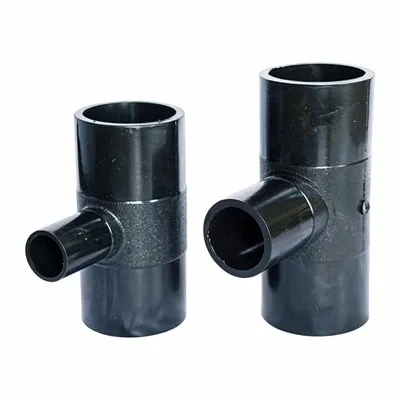
First, standard straight coupling: this is the most common, the basic piece I just talked about. It’s for connecting two same-sized U-PVC pipes in a straight line, indoors or outdoors, for drainage, water supply, or low-pressure irrigation. It’s the workhorse, used in 70% of the U-PVC fittings jobs we supply. Then there’s a reducing coupling: this connects two different pipe sizes, like a 1-inch pipe to a ¾-inch pipe. That’s for when you’re branching off a smaller line from a main supply, for example, a toilet supply coming off a 2-inch main. I see a lot of people trying to use a standard coupling and shimming the gap, but that’s a recipe for a leak—reducing couplings are machined to fit two different sizes, so the seal is tight.
Then there’s the expansion coupling, sometimes called an expansion joint coupling. This is a beefier version of the standard coupling, designed for longer runs or areas with extreme temperature swings. It has a special flexible sleeve inside, instead of just a slip space, that can handle up to 2 inches of movement—perfect for large industrial pipes, or pipelines running through concrete that shifts over time. I supplied expansion couplings for a municipal water main project last year, and the engineer specifically specified them because the line ran through a area that had settled ¾ inch in 10 years; without the expansion couplings, the pipe would have cracked from the movement.
Wait, and what about coupling vs. other fittings? A lot of people mix up couplings and unions, but that’s a critical distinction. A union is similar, but it has a threaded part that lets you disconnect the pipe without cutting—great for places you might need to access, like a water heater or a filter. But unions are more expensive, and not as strong for permanent connections. Couplings are simpler, cheaper, and just as strong for most applications. I always tell customers: if you’re making a permanent connection that doesn’t need to be taken apart, go with a coupling; if you need access, use a union. That’s the line, and it’s one we see a lot of installers cross, leading to unnecessary costs.
Now, let’s talk about the science behind why U-PVC is so well-suited for these purposes, and why other materials don’t work as well. U-PVC is resistant to corrosion, acids, and most chemicals, which means a coupling made of U-PVC won’t rust, degrade, or react with whatever’s flowing through the pipe—whether that’s drinking water, sewage, or fertilizer. Metal couplings would rust over time, especially in sewage, leading to leaks and contamination. Even CPVC, another type of plastic pipe, is not as chemically resistant to some of the harsh chemicals used in industrial applications. U-PVC’s rigidity also means the coupling holds its shape, so it doesn’t warp or loosen over time, even under pressure. We test every coupling we supply to 150 psi, which is way higher than the 40-80 psi typical for residential water lines, so we know they can handle the job.
I’ve been in this business long enough to see bad couplings cause all kinds of problems. Last year, a plumber came to me with a flood in a basement—his crew had used a cheap, off-brand coupling for a sewer line, and it had cracked after a year. The coupling’s walls were 20% thinner than our standard, so it couldn’t handle the pressure of the sewage. That’s why we only supply couplings made from virgin U-PVC, not recycled material—recycled plastic can have inconsistencies, weaker bonds, and lower resistance to chemicals. For me, that’s part of the purpose of a good U-PVC coupling: not just to connect pipe, but to stand up to the demands of the job, without failing.
Now, if you’re a contractor, homeowner, or engineer reading this, you’re probably thinking: so how do I pick the right coupling for my project? Let’s sum up the quick guide, from someone who’s been matching couplings to jobs for 12 years. First, match the pipe size exactly—use a measuring tape to confirm the outer diameter of your pipe, not just the nominal size, because sometimes nominal sizes vary slightly. Second, think about the environment: if it’s indoors, low pressure, standard coupling works. If it’s outdoors, extreme temps, or a long run, use an expansion coupling. If you need different sizes, use a reducing coupling. Third, don’t skimp on material—cheap, thin couplings will fail. All the couplings we supply meet ASTM standards, so you know they’re tested to last.
At the end of the day, the purpose of a U-PVC coupling is simple when you break it down: it’s the quiet workhorse that makes every plumbing, irrigation, and drainage system work. It’s the piece that turns two separate pipe segments into one continuous, functional system. Without it, you’d have to use messy, labor-intensive threading or welding, and pipes would crack from temperature shifts or ground movement. For us as U-PVC fittings suppliers, that’s why we don’t just sell parts—we provide the pieces that keep buildings dry, farms irrigated, and communities’ water systems running.
If you’re working on a project right now, whether it’s a small residential repair or a large industrial installation, and you need to make sure you’re using the right U-PVC couplings, reach out to our team to discuss your requirements. We can help you pick the right size, type, and material for your specific application, no matter how big or small the job is.
Butt Fusion Drainage Fittings References
ASTM D2467, Standard Specification for Poly(Vinyl Chloride) (PVC) Plastic Pipe, Schedules 40, 80, and 120
Plumbing-Heating-Cooling Contractors Association (PHCCA), “PVC Pipe and Fitting Installation Guide, 2021
National Ground Water Association (NGWA), “PVC Pipe for Irrigation and Water Systems, 2020
ASTM F437, Standard Specification for Threaded Plastic Pipe Fittings, and Plastic Pipe Couplings
Qingdao Polyfusion Machinery Co., Ltd.
As one of the most professional U-PVC fittings manufacturers and suppliers in China, we have world-leading production equipment and strong manufacturing capabilities. Please feel free to buy bulk high quality U-PVC fittings from our factory.
Address: Chengyang Industry Zone, Chengyang, Qingdao, Shandong, China
E-mail: export01@qdpolyfusion.com
WebSite: https://www.polyfusionfittings.com/
