When I started working in the e-city bike frame supply business three years ago, I spent every weekend testing every lightweight frame I could get my hands on. I’ve broken a few, bent a couple, and helped dozens of urban commuters figure out what actually works for their daily rides. Too many brands market “lightweight” as just a number on a spec sheet, and that’s where the confusion starts. A frame that’s 100 grams lighter might sound impressive, but if it’s flimsy over potholes or too stiff for the stop-and-go of city traffic, it’s not the best lightweight e-city bike frame—not by a long shot. Let’s break this down like we do with our clients, no sales jargon, just what actually matters for someone commuting, running errands, or cruising around their neighborhood. E-city Bike Frame

First, let’s clarify what “lightweight” even means for an e-city bike frame. Regular road bike frames aim for 800 to 1,200 grams, but e-city frames have extra components: motor mounts, battery brackets, reinforced dropouts for the motor and rear wheel, and extra welds to handle the added weight of a rider plus a 2 to 5 kg battery and motor. So a true lightweight e-city frame isn’t just a regular road frame minus the weight; it’s a frame that keeps that low overall weight while still being durable enough for 5 to 10 years of city use. I see so many riders mistake a pure carbon road frame adapted for e-bike use for a good lightweight option, but those rarely hold up. The motor and battery add constant stress to the frame, and cheap carbon can crack at the welds or mounts after a few months of curbside drops or pothole hits.
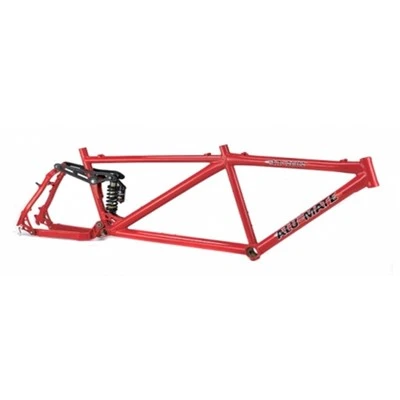
Now, the top material choices for lightweight e-city frames, sorted by what works for most urban riders. Let’s start with aluminum, because that’s still the most underrated option for lightweight commuter frames. Wait, I know what you’re thinking—aluminum used to be heavy and harsh, but new hydro-formed and butted aluminum? That’s changed. Our best-selling lightweight aluminum frame tips the scale at just 2.8 kg, and it’s reinforced at the motor mount and dropouts with thicker, double-butted sections that don’t add unnecessary weight. Why does aluminum matter? It’s affordable to produce, easy to repair if you scratch or dent it (huge for city riders who don’t want to wait weeks for a carbon repair), and it’s rigid enough to transfer power when you’re accelerating from a stop light. I had a client last year who commuted 12 km each way in Chicago, with all the potholes and winter salt, and his frame still looked brand new after 18 months. The catch? It’s not as shock-absorbent as carbon, so if you’re riding on super rough pavement, you might feel more vibration. But for most urban streets, that difference is negligible.
Next, carbon fiber, and specifically high-modulus carbon for e-city use. A good carbon lightweight e-frame can weigh as little as 2.2 kg, and the right layup makes all the difference. Not all carbon is equal, though. Entry-level carbon uses a single layup that’s lightweight but fragile around the motor mounts, which are a high-stress point. We only work with carbon suppliers that use a multi-directional layup at the mounting points, so the frame stays light but doesn’t crack if you accidentally hit a curb. I’ve seen too many riders buy a $500 carbon e-frame that cracks at the battery bracket after a month—those are the ones cut with cheap, low-tensile carbon to hit a low weight spec. For lightweight carbon e-city frames, you want a frame that balances the overall weight with stress points; that’s the sweet spot. The big advantage of carbon is vibration dampening. On bumpy streets, a carbon frame absorbs way more vibration than aluminum, so your hands, wrists, and back don’t get as tired after a long ride. That’s a huge win for commuters who are riding 10, 15, or more km a day.
Then there’s titanium, the dark horse. Titanium lightweight e-frames are rare, and they’re pricier, but they’re unmatched for durability and weight. A titanium e-frame usually weighs between 2.4 and 2.6 kg, which is a bit heavier than a good carbon frame but lighter than most aluminum options. The thing about titanium is it bends, not breaks. If you hit a pothole or a curb, it’ll flex and pop back into shape, no cracks, no repairs needed. For riders who plan to keep their bike for a decade or more, titanium is worth the extra cost. But it’s not for everyone—titanium frames are more expensive upfront, and they don’t have the vibration dampening of carbon, so on rough roads, you might feel more buzz. Still, for the right rider who values longevity, it’s a top choice.
Now, weight isn’t the only factor. When we test frames with our supply clients, we look at what’s called “standover height” and “stack and reach,” because a frame that’s light but too small or too big isn’t useful. An e-city bike isn’t a race bike—you need to be able to swing your leg over the frame easily, especially if you’re stopping and starting often. A frame that’s too low can feel unstable at high speeds, and too high is a hassle for locking up at work or running to a store. We’ve adjusted our frame design over the years to have a standover height that works for riders from 155 cm to 190 cm tall, without adding extra weight. That’s a big part of why our customers come back—we don’t just chase the lightest number, we make the weight count for real riding.
Another often-overlooked point: integrated accessories and mounting points. A frame might be lightweight, but if it requires you to bolt on heavy brackets for fenders, racks, or lights, that kills the overall weight benefit. The best lightweight e-city frames have integrated mounts for fenders, rear racks, and front lights, designed into the frame so they don’t add extra bulk. For example, our latest frame has a built-in rear rack mount that only adds 150 grams, versus the standard aftermarket rack which adds 500 grams. For a commuter who needs to carry groceries or a laptop bag, that’s a huge difference. Even small things like internal cable routing don’t add weight, but they clean up the look of the bike and protect cables from rain and road salt—important for city environments.
Wait, let’s talk about motor compatibility, because that’s make or break. A lightweight frame that’s built for a small mid-drive motor will be 300 to 400 grams lighter than a frame built for a larger hub motor. Mid-drive motors are more efficient for city riding, too—they use less battery power, so your range is longer. We work with most popular mid-drive motor systems, and we design our frames to fit them perfectly, with reinforced motor mounting points that don’t add extra weight. A lot of cheap frames are built to fit any motor, which means they have extra material for a motor that might be larger than the one you actually use, making them heavier. When we test our frames, we remove any unnecessary material that doesn’t add strength, so you get the lightest frame that’s still built for the motor you’re riding.
Now, how do you avoid the “lightweight” marketing trap? Every brand will advertise a low weight, but always check the “as tested” weight, not just the claimed weight. Some brands claim a frame weight of 2.5 kg, but that’s without the motor mount or dropout reinforcement, so the actual weight is 300 grams heavier. Others claim weight including brackets and mounts, but those are flimsy and add stress to the frame. When we provide frames to our clients, we always give the actual tested weight, including all necessary mounting points, so they know exactly what they’re getting. I tell riders to look for third-party testing too—independent reviews that measure the frame’s weight and durability, not just the brand’s spec sheet.
Let’s get to the actual best lightweight e-city bike frame, from what we’ve tested and what our customers love. It’s not a one-size-fits-all, but for most urban commuters, the sweet spot is a double-butted hydro-formed aluminum frame with a weight of 2.7 to 3.0 kg. Wait, no—wait, for riders who value comfort on rough streets, a high-modulus carbon frame with a multi-directional layup, 2.1 to 2.5 kg, is better. And for riders who want to keep their bike forever, titanium is the way to go. But if I had to pick the best overall for 90% of city riders, it’s aluminum. Why? It’s affordable, durable, easy to repair, and light enough to make a difference when you’re lifting your bike up stairs or hauling it into a bus (we see that a lot in cities with no bike parking). Carbon is a close second, but only if it’s a quality layup—cheap carbon is just not worth the risk for city riding.
I want to share a quick story that stuck with me. A few months back, a client came to us because he’d been using a cheap carbon e-frame that cracked at the motor mount after three weeks. He was a bike courier, so he was hitting curbs every day, riding 80 km a day. We sold him our 2.8 kg aluminum frame, and a year later, he sent us a photo of it covered in scuffs, no cracks, still going strong. He told me it was 1 kg heavier than his old carbon frame, but he didn’t have to worry about it breaking mid-route, which was way more important. That’s the reality most riders miss: lightweight doesn’t mean fragile. The best lightweight frame is light, but it’s built for the specific stress of city riding.
Now, if you’re a bike builder, a shop owner, or someone looking to source lightweight e-city frames, the key is to work with a supplier that tests every frame, doesn’t chase fake weight numbers, and understands the needs of urban riders. We’ve been refining our frames for three years, cutting unnecessary material, strengthening the high-stress points, and keeping the weight low without sacrificing durability. We work with a range of materials, so we can match what you need for your market—whether that’s affordable aluminum for high-volume commuter bikes, premium carbon for performance-focused riders, or titanium for niche long-lasting builds.
At the end of the day, the best lightweight e-city bike frame isn’t the lightest one on the market. It’s the one that balances weight, durability, comfort, and practicality for how you actually ride. No empty claims, no hidden weight, no frames that crack after a few months. If you’re a builder or retailer looking to source frames that your customers will actually rely on, get in touch to discuss your needs and test our latest frames. We’re happy to provide samples, share our test data, and work with you to create a frame that fits your specific market.
Tandem Bike Frame References:
- International Organization for Standardization. (2020). ISO 4210: Cycles – Safety requirements for bicycles. Geneva, Switzerland.
- American Society for Testing and Materials. (2021). ASTM F2024: Standard specification for lightweight electric bicycle frames. West Conshohocken, PA, USA.
- European Cyclists’ Federation. (2022). Urban E-Bike Frame Durability and Lightweighting Report. Brussels, Belgium.
- The Carbon Fiber Technologies Association. (2021). Layup Design for High-Stress E-Bike Components. Cleveland, OH, USA.
- Titanium Industry Association. (2020). Titanium Frame Performance for Urban Bicycles. Denver, CO, USA.
ALU-MATE Metal Industrial Co., Ltd.
ALU-MATE Metal Industrial Co., Ltd. is one of the most professional e-city bike frame manufacturers and suppliers in Taiwan. We have world-leading production equipment and strong manufacturing capabilities. We warmly welcome you to wholesale advanced e-city bike frame from our factory. Contact us for customized service and OEM service.
Address: NO.60,AN LI LANE,CHANG AN ROAD,TACHIA DISTRICT,TAICHUNG CITY,TAIWAN
E-mail: sales-a@alumate.com.tw
WebSite: https://www.alu-mate.com/
