If you’ve ever walked through a bakery, a construction yard, or even a lab mixing custom fertilizer blends, you’ve probably passed a vertical mixer without stopping to think about how it actually works. As someone who’s been selling vertical mixers for 12 years, I get it—most people just want the machine that mixes their stuff well, on time, without breaking. But once you understand how it all comes together, you’ll stop seeing it as a “big metal bucket” and start appreciating why it’s the workhorse it is for so many industries. Let’s break it down, no jargon, just straight-up how these things actually operate, from the first flip of the switch to the moment your mix is ready. Vertical Mixer
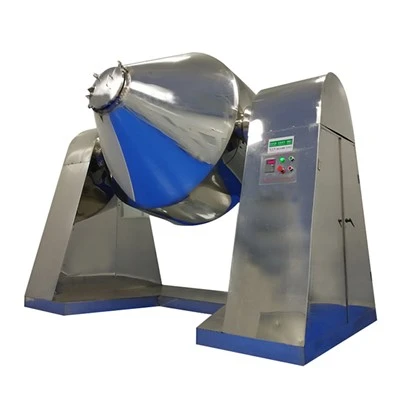
First, let’s skip the confusing definitions. A vertical mixer, at its core, is a tall, cylindrical (or sometimes slightly cone-shaped) container, usually sitting on a base, with a shaft running down the center from the top. That shaft is the main star of the show here—no horizontal blade wheel spinning side to side, no big auger dragging stuff around the bottom. It’s straight up and down. That’s what makes it vertical, and that’s why it’s way better than horizontal mixers for a ton of jobs.
Let’s walk through a basic operation step by step, like we’re loading it together right now. You start with the hopper, that open area at the top where you dump raw materials. Say you’re running a feed mill: corn, soybeans, mineral supplements, a little molasses for flavor. Or maybe it’s a concrete batch plant: cement, sand, aggregate, water. Or even a craft soap maker mixing lye, oils, and fragrance. You don’t just dump everything in at once, usually—for most consistent mixes, you layer them a little, but the beauty is, even if you toss it all in randomly, the machine will fix that.
Once the load’s in, you flip the main switch. The center shaft starts spinning, and attached to that shaft are blades—paddles, sometimes called “blades” or “impellers,” depending on the size. These aren’t flat, boring blades like a ceiling fan. They’re angled, usually tilted a little downward, not straight out. That angle is everything. When the shaft spins, those blades don’t just push the material around the bottom of the mixer (which is what a horizontal mixer does, often leaving unmixed clumps or material stuck to the walls). Instead, they do two things at the same time: they push the material up along the outer walls of the cylinder, and they drag it down near the center.
Wait, that sounds like a circle, right? That’s the key motion: a continuous vertical flow loop. Let me explain that again. If you stand next to a running vertical mixer, you’ll see material climbing the walls, like a little wave moving up. At the same time, near the center, that same material is dropping back down, because the blades pull it there as they spin. It’s not a side-to-side mix; it’s a three-dimensional churn. No dead spots, no material just sitting in one corner. That’s why vertical mixers are so good for sticky stuff, dense stuff, even materials that tend to clump—they’re never just sliding around flat on the bottom.
Now, let’s talk about the little helper parts, because they make the difference between a good mix and a mediocre one. Most vertical mixers also have a set of “bottom blades” or “scrapers” attached near the base of the center shaft. These spin right along the floor of the mixer, scraping any material that would otherwise get stuck there, pushing it back up into the main flow. If you’ve ever dealt with a mixer that leaves a cement crust or a dried cake of feed at the bottom, that’s the part you didn’t have. For some larger models, especially for concrete, there might be a set of stationary baffle plates bolted to the inner walls of the cylinder. These catch the upward-moving material, break up clumps, and force it to change direction—so it’s not just gliding up the wall, it’s crashing into the baffles, splitting apart, and mixing even more thoroughly.
How long does all this take? That’s another thing people ask. For a small lab-scale mixer, mixing a 50-pound batch of dry powder? 2 to 4 minutes. For a 2,000-pound batch of concrete? 5 to 8 minutes. For a big batch of animal feed for a farm? 10 to 15 minutes, depending on how many different ingredients you’re throwing in. You might think more time equals a better mix, but that’s not always true—over-mixing can actually cause some materials (like some oils or fine powders) to clump, or even generate too much heat if you’re mixing something reactive. A good vertical mixer’s blade design is calibrated for just the right speed, so it mixes evenly without wasting time.
Let’s talk about different types, because not all vertical mixers work exactly the same. I don’t sell every single one, but I’ve worked with enough to know the differences matter. There’s the planetary vertical mixer, which is what you usually see in bakeries for cake batter or bread dough. The shaft doesn’t just spin on its own axis—it also orbits slowly around the center of the tank. That extra movement gives way more even mixes for things that are super thick, like dough or cookie filling. Then there’s the cone-shaped vertical mixer, sometimes called a “bin mixer,” used a lot in pharmaceuticals or food processing where you need super precise, sterile mixes. The cone shape at the bottom means all material drains out easily, no stuff left stuck in the bottom after you empty it. Oh, and there’s the high-shear vertical mixer, which spins way faster—used for mixing liquid and powder, like when you make yogurt or sauce, because it breaks down fine particles and combines liquids way quicker.
Now, let’s get real about common myths. A lot of people tell me “vertical mixers are only for dry stuff, right?” No, not at all. I’ve sold models that mix wet concrete, batter with water, even sludge for wastewater treatment plants. The key is the blade design and motor power—you just need a stronger motor and sometimes different blade angles for wet or heavy material. Another myth: “they’re too big for small jobs.” We sell tabletop vertical mixers for craft soap makers and small bakeries, right alongside 5,000-gallon models for construction companies. Size doesn’t change how they work, just the scale.
What about wear and tear? That’s a big one for anyone using these machines, because no one wants to replace parts every month. The blades are usually made from hardened steel, sometimes coated with a protective layer for abrasive material like concrete or gravel. The center shaft is sealed tight, so it doesn’t leak material, and the base is reinforced to handle the weight of a full load. The cool thing about vertical mixers is, since the main mixing action is vertical and not dragging side to side, the blades and shaft wear slower than they do on horizontal mixers. That’s why a lot of our customers tell us our mixers last 5 to 10 years with regular maintenance, instead of 2 or 3 like the competition’s cheaper models.
Wait, let’s circle back to how the flow works, because that’s the part that actually makes it different. Let’s use a relatable example, since I like to keep it simple. Imagine a bathtub full of water, and you stick your hand in the center, swirling it so the water climbs up the walls. That’s the basic vertical mixer flow, only instead of water, you have flour, cement, or feed, and instead of your hand, you have angled blades that spin nonstop. If you were to add a drop of food coloring to that tub, it would spread evenly all over, right? No clumps, no streak of color left in one spot. That’s exactly what a good vertical mixer does for your ingredients—no more “one batch has too much sand, the next has too little” or “there’s a big clump of flour in the cake batter.”
Now, what about when it’s time to unload? That’s another huge advantage of vertical mixers. They usually have a discharge gate at the bottom, right where the cone shape tapers. As soon as you open that gate, the continuous vertical flow of the mixer pulls almost all the material out in one smooth dump. You don’t have to shovel, you don’t have to use a secondary auger, and almost no material gets stuck in the tank. For industries like pharmaceuticals, where even a tiny bit of leftover material can contaminate the next batch, that’s a game-changer. I’ve had a customer who used to waste 5% of every batch of vitamins because of leftover material in their old horizontal mixer—now with our verticals, that number is under 1%. That’s the kind of savings people miss when they just look at the upfront cost.
Let me tell you a quick story to make this real. A few years back, I had a guy come to me from a small ready-mix concrete company. He’d been using a horizontal mixer for 10 years, and he was sick of it—every batch had uneven slump, some loads were too crumbly, some were too runny, and he was constantly replacing the horizontal blades. He tried a competitor’s vertical mixer first, and it worked okay, but the blades wore out in 6 months, and the motor died after a year. He switched to one of ours, and three years later, he still hasn’t had to replace a blade, and his mix consistency is so good his construction clients now ask for his concrete specifically. That’s not just a sale—that’s how well these things work when they’re built right.
So, why does all this matter to you? If you’re running a small bakery or a big construction site, if you’re mixing animal feed or pharmaceuticals, the way a vertical mixer operates directly affects your product quality, your waste, and how much time you spend cleaning and maintaining the machine. It’s not just a metal box with blades—it’s a system designed to move material in a way that horizontal mixers just can’t, especially for the tricky stuff.
If you’re tired of inconsistent mixes, high maintenance costs, or wasting material, let’s talk. I’ve worked with thousands of customers over the years, from hobbyists with 50-pound lab mixers to big contractors with 10-ton industrial units, and I can help you find the right model for your specific job. No pressure, no sales pitch—just straight-up advice based on what works for other folks in your line of work. Reach out, and we can walk through your needs, answer any questions, and get you set up with a mixer that will make your job way easier.
Tunnel Dryer References
- American Society of Agricultural and Biological Engineers. (2019). Standard for Vertical Mixers for Agricultural Applications. ASABE Publication S361.
- Concrete Plant Manufacturers Bureau. (2021). Mixer Performance Standards for Ready-Mix Concrete Operations. CPMB Technical Report 102.
- Food and Drug Administration. (2020). Guide to Mixer Equipment for Pharmaceutical Dosage Form Manufacturing. FDA Guidance Document 2020-008.
- Manufacturing Extension Partnership. (2022). Industrial Mixer Efficiency and Maintenance Best Practices. NIST Publication 22-004.
Nanjing Huozao Machinery Technology Co., Ltd.
Nanjing Huozao Machinery Technology Co., Ltd. is one of the most professional vertical mixer manufacturers and suppliers in China, also supports customized service. With abundant experience, we warmly welcome you to buy durable vertical mixer for sale here from our factory. For price consultation, contact us.
Address: No.2, Kuailu Road, Longtan Street, Qixia District, Nanjing
E-mail: hz@huozaodryer.com
WebSite: https://www.huozaodryer.com/
