Hey everyone, let’s cut to the chase—nothing kills a workday, a gaming sesh, or even just a lazy Netflix binge faster than a dead laptop that won’t charge, right? I’ve been at this Adapter game for over a decade now, and I swear the most common fix I get asked about isn’ replacing a whole laptop (that’s way more expensive) — it’s swapping out a faulty power adapter. Most people don’t realize this is way simpler than it sounds, especially if you’ve got the right info. Today, I’m breaking this down step by step, no fancy jargon, no confusing charts, just real, actionable stuff I’ve seen hundreds of customers mess up (and fix) over the years. Adapter
First off, let’s make sure we’re even dealing with a faulty adapter, not a laptop issue. I can’t tell you how many times someone calls me panicking saying their adapter’s broken, but it turns out they tripped over the cord and damaged the charging port on their laptop. So let’s start with the quick test you can do right now, no tools needed. Grab a friend or family member’s working adapter (the same model, not just any random one) and plug it into your laptop. If it charges? Your old adapter is toast. If not? Time to check your laptop port. Another super easy tell: look at the LED light on the adapter. Most of our adapters have that little power light. If it’s off when you plug it into the wall, or flickering like a bad Christmas light, that’s a dead giveaway it’s faulty. If it’s bright steady when you use the good one, and dim or dead on your old one? Yep, that’s the issue.
Now, here’s the part that trips everyone up: picking the right replacement adapter. I’ve had customers come in with a laptop that needs a 65W adapter, try to use a 45W one, and then wonder why it dies mid-Zoom. Or worse, grab a random 90W one that’s too powerful and end up frying their battery over time. Let’s make this simple, no math degree required. Grab your old faulty adapter, flip it over, and look at the label. You’ll see three numbers: Voltage (V), Current (A), and Wattage (W). The wattage is just Volts times Amps, so if your old one is 19V, 3.42A, that’s 65W. For a replacement, you can go with the same wattage, or higher—never lower. Wait, let me repeat that: NO LOWER. I can’t stress that enough. If your laptop needs 65W, a 45W adapter will struggle to keep up, especially if you’re running heavy stuff like video editing or multiple browser tabs. It’ll overheat, die early, and might even damage your laptop. Higher is okay because the laptop will only draw as much power as it needs. The only other thing to check is the connector tip—you need that little plug to fit perfectly into your laptop’s charging port. Not too loose that it falls out when you nudge it, not so tight you have to force it in (that’s how you break the port). At our shop, we make sure every adapter has a few extra tip sizes and the correct pin orientation, so you don’t have to hunt for that.
Okay, so you’ve got the right replacement. Now let’s do the actual swap, and let’s be real—you probably don’t have a whole toolbox lying around for this. First, unplug everything. Pull the adapter out of the wall, and pull the tip out of your laptop. Wait, before you touch anything, let that old adapter cool down for a minute. If it’s been running hot (which faulty ones often do), touching it right away can burn you, and letting it cool makes sure there’s no residual power left—safety first, always. Now, take your new adapter and check it over. Look for any visible damage: the cord frayed? The plastic around the plug cracked? Even small cracks can mean bad connections, so if that’s the case, swap it right away too. No need to risk it.
Here’s a pro tip I’ve learned over the years: don’t yank the cord to unplug the adapter. I see people do this all the time, yanking that thick black cord out of the wall or laptop like it’s a weed, and that’s exactly how the internal wires break. Instead, grab the end of the plug—where the cord meets the adapter body, or the tip end—and pull straight. That’s way gentler on both your cord and your ports. Makes a huge difference in how long your adapters last.
Now, plugging in the new one. First, push the tip into your laptop port until it clicks or feels secure—no forcing it, like I said earlier. Then plug the other end into the wall. Wait, before you walk away, check that LED light. If it’s on, great. If not, double-check that both ends are plugged in properly, maybe try a different wall outlet (sometimes outlets go bad too, and that’s another thing people blame on the adapter). Once it’s lit, fire up your laptop. Watch for the charging icon to pop up in the corner, and let it run for 10 minutes or so to make sure it’s actually charging. If it is? You’re golden. If not, double-check that wattage and tip size—9 times out of 10, it’s a bad fit, not a bad adapter.
Wait, let’s talk about common mistakes I see customers make that make the adapter die faster. Number one: leaving the adapter plugged in all the time. Yeah, I know, it’s easy to just leave it in the wall and let the laptop charge while you work, but constant power flow when the battery is already at 100% stresses the adapter and the battery out. I tell everyone: unplug the wall end once the battery’s full, or use the “battery saver” setting on most laptops that limits charge to 80%—it’ll extend both your adapter and battery life by years. Number two: using the adapter on uneven surfaces. Adapters get hot, right? They need air flow to cool down. If you set it on a bed, couch, carpet, or even a pile of books, the heat can’t escape, and that’s why they burn out so fast. I keep mine on the desk next to my laptop, open area, no blocking. Number three: rolling over the cord with a chair or stepping on it. That crushes the internal wires, and after a few months, the connection dies. If you need to route the cord, use a cable clip to keep it off the floor, no sharp bends.
And let’s get real—sometimes the old adapter is so busted that you can’t even tell what the label says. Maybe the label wore off, the plastic melted, or the cord’s a mess. No problem, that’s super common too. First, check your laptop’s manual—most of them list the required adapter specs in the back. If you don’t have the manual, a quick Google search with your laptop model number will pull up the exact wattage, voltage, and tip size. Our team has a big list of all popular laptop models, so if you shoot us the model, we can hook you up with the exact adapter you need, no guessing. We’ve all been there, staring at a fried adapter with no specs, so we made it easy.
Another thing: should you get an original adapter or a third-party one? I get this question every single day. Original brand adapters are fine, but they’re way more expensive, sometimes twice as much as a good third-party adapter that meets the same safety standards. At our shop, we test every adapter for overheating, voltage consistency, and durability before we send it out—same safety standards as the original, way cheaper. The only time I’d say to skip third-party is if your laptop is super high-end, like a $2,000 gaming rig that needs custom power, but 90% of people don’t need that. Just make sure any third-party adapter has the same specs we talked about, and avoid those super cheap ones from random Amazon sellers that have no safety certifications. Those can actually damage your laptop, so it’s not worth the $10 savings.
Wait, what about when the adapter is partially working? Like, it works if you bend the cord in a certain spot. That’s the worst, right? One day it’s fine, the next it only charges if you hold the cord at a perfect angle. That means the internal wires are broken, and you can’t fix that—you have to replace it. Trying to tape the cord or bend it back won’t last, and it can create a short circuit, which is bad news for both your laptop and your house. So don’t mess around with that—swap it out before it causes bigger issues.
Let me walk you through a quick real example, just to make this concrete. Last month, a customer came in with a 2018 MacBook Pro that wouldn’t charge. She said she’d had her adapter for 3 years, and it started acting up a week prior—only worked if she propped the cord up with a pencil. First, we tested with a different adapter, confirmed hers was faulty. Her old adapter had a worn label, so we looked up her laptop model and found it needed a 61W USB-C adapter. She tried using a 30W one first, which we told her right away wouldn’t work, so she swapped to the 61W. We also gave her the cable clip tip, and told her to make sure the adapter’s not tucked under her desk. She came back a week later saying it works way better, no more bending the cord. That’s exactly the kind of fix we do all the time.
Now, a few quick safety tips, because I care about you (not just selling adapters, promise). Never use a damaged adapter—if the cord is frayed, the plug is cracked, or it smells like burning, throw it away. The burning smell is wires melting, that’s a fire hazard, not a small issue. Also, don’t use adapters from other devices that have completely different specs. Yeah, your phone’s USB-C works with your laptop sometimes, but if your laptop needs more power, it’ll take forever to charge and could damage the battery. And never leave a faulty adapter plugged in while you’re sleeping or out of the house—like I said, fire risk.
Okay, so if you’ve followed this, you know how to diagnose a faulty adapter, get the right replacement, swap it safely, and even extend its life. But let’s be honest, not everyone wants to do the legwork, or they have a super old laptop with no model number handy, or their adapter is fried so bad they can’t read anything. That’s where we come in. We make this whole process painless. You don’t have to guess at specs, you don’t have to hunt for a tip that fits, you just tell us your laptop model or what’s going on with your adapter, and we’ll send you the perfect replacement, tested to work, at a fair price. No hidden fees, no weird fine print, just quality adapters that won’t die on you in 6 months.
If your laptop’s adapter is acting up, don’t stress—this is one of the easiest laptop fixes out there, way better than dealing with a broken screen or hard drive. You can do it in 5 minutes, no tech degree needed. If you need help picking the right one, or you’re ready to replace your faulty adapter, reach out to our team to connect and get your order sorted. We’re here to make sure your laptop’s back up and running, so you can get back to what matters, no dead battery stress.
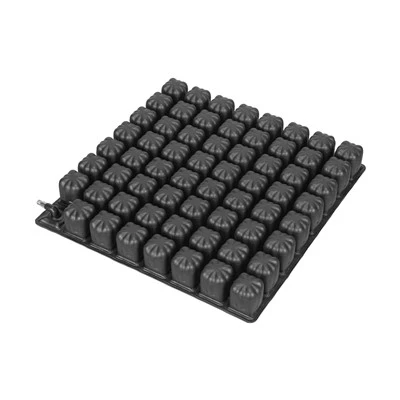
Air Cell Wheelchair Cushion References:
- Consumer Product Safety Commission. Electrical Adapter Safety Tips for Home Electronics. Retrieved from general consumer safety resources
- Laptop Battery Association. Guidelines for Compatible Power Adapter Specifications. Industry technical standards documentation
- PC Magazine. How to Diagnose a Faulty Laptop Charger Without Wasting Money. Online consumer technology guides
Ningbo Dacheng Medical Instrument Co., Ltd.
As one of the most professional adapter manufacturers and suppliers in China, we have world-leading production equipment and strong manufacturing capabilities. Please feel free to wholesale advanced adapter made in China here from our factory.
Address: No.1, BL.12, Tanxiang South Road, Yuelong District, Ninghai County, Ningbo, Zhejiang, China
E-mail: sales@dachengmed.com
WebSite: https://www.dachengcare.com/
