If you’ve ever stood on our production floor and watched a tumbling barrel spin, grit and polish particles flying across the room, you know choosing the right media isn’t just a minor detail—it’s what makes a part go from “crude” to “precision finished.” For years, customers have asked me this question: “Is ceramic tumbling media better than plastic?” As a 12-year veteran in the tumbling media supply industry, I’ve tested every material under our sun, worked with metal fabricators, jewelry makers, and aerospace part manufacturers alike, and I’m here to break it down without the sales fluff you get from big-box suppliers. Tumbling Media
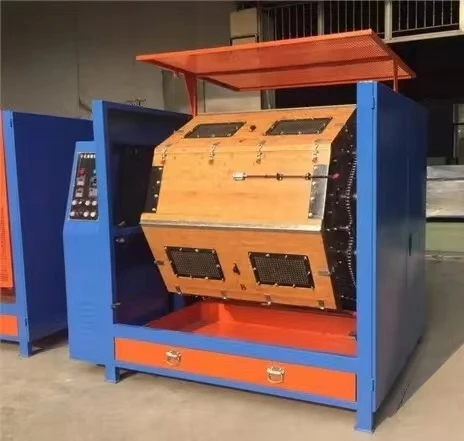
Let’s start with the basics: tumbling media is the abrasive or neutral material you load into a barrel with your parts to smooth edges, remove burrs, polish surfaces, or even deburr internal holes. Ceramic and plastic are two of the most popular options, but their core properties are so different, the choice usually comes down to what you’re actually trying to accomplish—not just a vague “ceramic is stronger” claim.
First, let’s talk about density, because this is where the biggest performance gap lives. Ceramic media has a density of roughly 2.5 to 3.8 g/cm³, depending on the type—alumina ceramic, the most common, lands around 3.6 g/cm³. Plastic media? That’s only 0.9 to 1.5 g/cm³, so it floats in water. Density translates directly to impact force during tumbling: when a barrel spins, media collides with parts at high speed. Heavier media delivers more force, which means faster deburring, faster surface smoothing, and better penetration into tight crevices or internal holes on large, heavy parts. I once had a client who made steel hydraulic fittings; they were using plastic media and taking 8 hours to remove sharp burrs from 1-inch internal ports. Switched to 3.6 g/cm³ alumina ceramic media, and that process dropped to 2.5 hours—no loss of part quality, just a huge time savings.
Plastic media does have a use case here, though. If you’re working with extremely delicate parts—think thin aluminum watch cases, tiny electronic connectors, or even glass components—too much force from ceramic will bend, scratch, or break them. Plastic’s lower density means gentler impact, so it won’t warp or mar soft, fragile materials. That’s not to say ceramic is brutal; we make porous ceramic media specifically for polishing soft metals, with a softer surface that won’t scratch, but it’s still denser than plastic.
Next, wear life. This is a make-or-break cost factor for regular tumbling operations. Ceramic media is designed to be hard—its Mohs hardness ranges from 7 to 9, compared to plastic’s 2 to 3. That means it doesn’t chip, crack, or wear down fast. We’ve had some clients run the same ceramic load for 150 to 200 hours of production before they need to replace more than a handful of pieces. Plastic media? It wears down quickly—sometimes just 20 to 50 hours, depending on how often you’re processing hard metals. That means you’re buying new media every few weeks instead of every few months, which adds up. One of our aerospace clients told me they saved $12,000 a year just by switching from plastic to ceramic media, even though ceramic costs 30% more per pound upfront. The lower replacement frequency more than offset the higher initial cost.
But wear isn’t just about how long media lasts—it’s about what happens when it does wear. Plastic media breaks down into tiny, soft plastic shavings that mix with your parts and your tumbling solution. Those shavings can clog parts, get into assembly lines, or even leave a faint plastic residue that needs extra cleaning steps. Ceramic media, when it does wear, breaks down into fine, abrasive dust that’s easy to filter out of your solution. It doesn’t leave residue on parts, which saves time on post-tumbling cleaning. We had a jewelry maker client who complained plastic shavings were getting stuck in the filigree of their custom rings; switching to ceramic media eliminated that problem entirely, cutting their cleaning time by 40%.
Wait, but what about finishing quality? Let’s get specific here. If you need a rough deburr or a matte finish, both materials can work, but for high-precision polishing—like mirror finishes on stainless steel medical implants, or smooth, burr-free edges on aerospace turbine blades—ceramic is the clear choice. Its consistent hardness and controlled abrasive particle size (we can produce ceramic media with grit sizes from 12 to 320) mean you get a uniform finish across every part. Plastic media, by contrast, is softer, so it can leave uneven scratches or dimples on hard surfaces, even if you use it for a long time. I’ve seen plastic media turn a smooth aluminum part into something with a slightly rough, inconsistent finish, while ceramic left a mirror polish that needed zero extra buffing.
That said, plastic media has one big advantage for small-batch or hobby use: cost upfront. If you’re a home shop or a small manufacturer that only runs tumbling operations a few times a week, you don’t need to invest in durable ceramic media. Plastic is cheap to buy, and even if you have to replace it every few months, the total cost is lower for low-volume use. Ceramic shines for high-volume, industrial operations where uptime and consistent quality matter most. I always tell small clients: if you’re running less than 100 pounds of parts a week, plastic is fine. If you’re running over 500 pounds, you’re wasting money on plastic.
Another often-overlooked factor is chemical resistance. Tumbling processes often use soap, acids, or alkaline solutions to clean parts. Ceramic media is inert—it won’t react with almost any chemical solution, so it doesn’t leach particles or change the chemistry of your solution. Plastic media, especially cheaper types, can break down in strong acids or over time with repeated use, leaching plasticizers or small amounts of material into your solution. That not only contaminates your parts, but it can also shorten the life of your tumbling solution, meaning you have to change it more often. One of our metal finisher clients had to replace their plastic media every 6 months because the solution started turning cloudy from plastic leaching; switching to ceramic media cut their solution replacement frequency to every 18 months.
Let’s address a common myth: “Ceramic media causes more scratches.” That’s only true if you’re using the wrong type. We offer non-abrasive ceramic media for polishing, which has a smooth, rounded surface that won’t scratch even soft materials like copper or brass. It’s the same density as abrasive ceramic, so it delivers the same force without the sharp edges that cause scratches. Plastic media, even “polishing-grade” plastic, has a softer surface that can leave fine scratches on hard metals, because it wears down and becomes uneven over time.
So, putting it all together: is ceramic tumbling media better than plastic? It depends on your operation, but for most industrial, high-volume, or precision applications, the answer is a resounding yes. The longer wear life, lower total cost, better finishing quality, and chemical resistance of ceramic far outweigh the higher initial cost for anyone running regular tumbling operations. Plastic has its place—delicate parts, small batches, hobby use—but if you’re serious about consistent, efficient tumbling results, ceramic is the way to go.
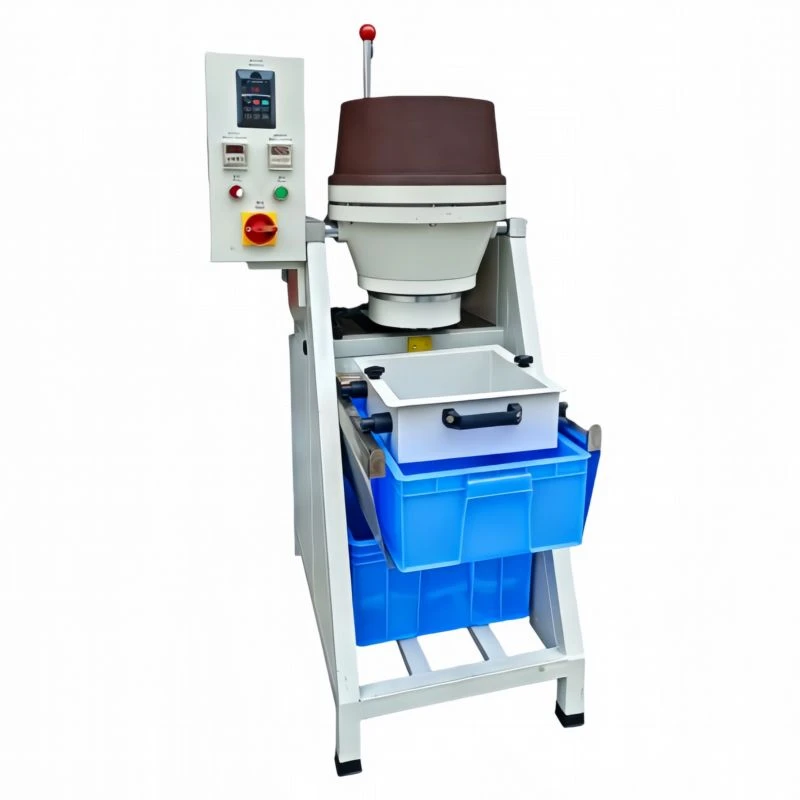
At the end of the day, I’ve seen too many clients waste time and money using the wrong media. If you’re still unsure which is right for your parts, we can run a small-scale test in our lab, no obligation. We can tumble a sample of your parts with both ceramic and plastic, show you the time and cost differences, and help you make a choice that works for your business. Whether you’re processing 10-pound hobby batches or 10,000-pound industrial runs, we have media tailored to your needs. Reach out to our team to discuss your specific application and get a custom recommendation.
Machine References
- ASTM International. Standard Test Method for Wear Resistance of Abrasive Media for Mass Finishing. ASTM G133-19, 2019.
- Manufacturing Engineering Society International. Mass Finishing Processes: A Guide for Industrial Applications. MES Press, 2021.
- The Finishing Company. "Abrasive Media Selection: Key Factors for Cost and Quality Efficiency." Industrial Finishing Journal, Vol. 45, No. 3, 2022, pp. 22-27.
- Society of Manufacturing Engineers. Guide to Mass Finishing for Aerospace and Medical Components. SME, 2020.
KS Lab Finishing Co., Ltd.
As one of the most professional tumbling media manufacturers in China, we also support customized service. We warmly welcome you to wholesale durable tumbling media made in China here from our factory. If you have any enquiry about pricelist, please feel free to email us.
Address: No.11-14, Yantian Shuibei Commercial Street, Fenggang Town,Dongguan,China
E-mail: sales@kslabfinishing.com
WebSite: https://www.kslabfinishing.net/
