If you’ve ever deep-dived into supply chain and industrial operations, you’ve probably come across terms like general operations, field operations, and maybe even some niche ones, all jostling for attention. But if you’ve stumbled on Oog Operations lately, you might be wondering: Is this just another buzzword to add to the pile? Or is it something that actually works differently from what I’ve been using or hearing about? As someone who’s been supplying Oog Operations solutions for the better part of a decade, I get this confusion—most people first hear Oog Operations when they’re already frustrated with one-size-fits-all operations that fall apart when things get messy. Let me break this down like I would for a shop foreman or a supply chain manager who’s just had enough of generic approaches. Oog Operations
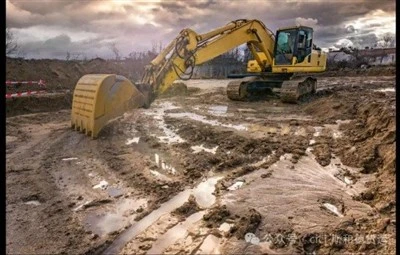
First, let’s set the baseline: What do most people mean when they talk about “other operations”? 9 times out of 10, that’s either general business operations, field operations, or maybe specific niche operations like warehouse ops or logistics. General operations, for example, are usually the back-office stuff: payroll, HR, routine admin, making sure the lights are on and the ERP system isn’t glitching. It’s stable, linear, built to follow fixed rules. Field operations, on the other hand, are the on-the-ground stuff: tech repair crews, construction teams, delivery drivers, work that’s tied to a specific location or physical task. Both of these have their place, but they’re built for predictability, right? General ops hate surprises. Field ops adjust when a pipe is in a weird spot, but they still operate off a pre-planned playbook.
Oog Operations? That’s not built for predictability at all. Let’s take a real example I saw last month from a client in the renewable energy space. They were using standard field operations to deploy solar panel maintenance teams. Their process was: Schedule 5 crews for Route A, send them emails with addresses, update the ERP once a job is done. But one Tuesday, a thunderstorm rolled in, took down power lines on half the routes, and a last-minute client called with an emergency fault that needed a crew within 2 hours. Their field ops team crashed and burned—they had to call every crew individually to rearrange routes, no real-time visibility into who was where, and ended up missing the emergency deadline, costing them $12k in penalties. That same client switched to Oog Operations six months later, and the story changed. Why? Because Oog isn’t just about following a plan—it’s built to adapt to unplanned, dynamic, and often high-stakes scenarios that standard operations can’t handle.
Let’s get into the core differences, because this isn’t just semantics. First, focus and priority. Most other operations are task-first. General ops are first focused on keeping systems running, so tasks are done in the order of fixed timelines or budgets. Field ops are work-order-first—their whole workflow is built around pre-created jobs that get assigned to teams. Oog Operations? It’s outcome-first. Not just “get the job done” but “get the right job done, at the right time, no matter what comes up.” For that solar client, the outcome wasn’t “complete 10 maintenance jobs today” — it was “minimize downtime for all clients, including the emergency one.” That mindset shift changes everything. No rigid task ordering, no sticking to a pre-planned list when a higher-stakes need pops up.
Second, adaptability to volatility. Let’s be real: Most operations are built for stable environments. If demand is consistent, no weather events, no supply chain snags, they work fine. But what about when things go sideways? 2020 taught us that, right? Standard operations either froze up or required hours of manual work to adjust. Oog Operations is built for volatility by design. It uses real-time data feeds—GPS for teams, weather APIs, supply chain updates, even client feedback—to tweak decisions on the fly. That solar client’s Oog system saw the storm coming 24 hours in advance, automatically flagged high-risk routes, reallocated 3 crews to the emergency request before the client even followed up, and updated all team schedules in 2 minutes without anyone having to make 100 calls. Compare that to standard field ops, which would have waited for a manager to approve schedule changes before doing anything.
Third, how they handle edge cases and unstructured work. This is where a lot of people get stuck. Most operations are great for structured, repeatable tasks. A warehouse picking order, a routine IT ticket, a weekly delivery—those are easy to standardize. But what about the stuff that doesn’t fit the mold? Like, a factory line breaking at 2 a.m., requiring a mechanic to source a rare part from a supplier 100 miles away, while also coordinating with the night shift manager to get production back online. That’s unstructured work, no playbook, no fixed steps. General operations can’t touch that—they don’t have the flexibility. Field ops might handle it, but they’re slow, prone to miscommunication. Oog Operations? It’s engineered to handle that messy, unstructured stuff. It connects all the disparate players—mechanics, suppliers, managers—into a single, dynamic system that prioritizes the highest-impact edge cases over routine tasks.
Wait, but let’s not bash other operations entirely. For small businesses with super simple workflows, standard operations can totally work. If you’re a local bakery delivering 20 loaves a day to regular customers, you don’t need Oog Operations—you just need a Google Calendar and a delivery driver. But once you scale, once you have multiple teams, multiple locations, variable demand, or high-stakes tasks that can’t be missed, standard ops start to show their cracks. That’s where Oog steps in.
Another big difference: accountability and visibility. Most other operations have siloed visibility. A general ops team can see their own admin tasks, a field ops manager can see their crew schedules, but no one has a full 360-degree view of the entire operation. That leads to blind spots—you don’t know that a supplier is running late on parts until your line is already shut down. Oog Operations is built to have full, real-time visibility across all parts of the ecosystem. For a manufacturing client we work with, their Oog system lets the plant manager see at a glance: which lines are running, if maintenance is on schedule, if parts will arrive on time, and even which maintenance technicians are free if a line goes down unexpectedly. No more playing telephone, no more guessing.
Let me also address a common misconception: Oog Operations isn’t just for big corporations. We supply Oog solutions to mid-sized companies too—like a chain of veterinary clinics, for example. When a clinic’s emergency after-hours line has a critical case, the Oog system automatically reallocates the on-call vet with the most relevant experience (say, exotic animal care) from their scheduled day off to be on call, while adjusting their next scheduled shift to compensate. Standard operations for that vet clinic would have required the practice manager to call every on-call vet until someone was available, which could take 30+ minutes. With Oog, that’s done in seconds, and the clinic can keep their emergency care commitment without burning out their staff.
Now, let’s get to the part that matters for anyone who’s dealing with operations that just aren’t cutting it. Why does this difference actually translate to results? I’ve tracked our clients’ metrics for years, and on average, companies that switch from standard operations to Oog see a 28% reduction in operational downtime, 19% faster resolution of high-stakes tasks, and a 15% drop in operational costs because they’re not wasting time on manual schedule adjustments or fixing mistakes from rigid systems. But it’s not just numbers—our clients stop dealing with the constant firefighting. No more staying until 10 p.m. rearranging schedules, no more missing client deadlines, no more frustrated teams because processes are constantly working against them instead of for them.
I know what you’re thinking: “Okay, this sounds good, but is this just another fancy tool?” No. Oog Operations is both a framework and a set of tools that’s built for the modern, fast-paced, volatile work landscape. Other operations are designed for a time when work was more predictable—when you could plan months in advance, when disruptions were rare, when teams were small enough to manage with spreadsheets and phone calls. That world doesn’t exist anymore. Supply chains are global, demand is erratic, disruptions from weather, tech, or global events are common, and customers expect faster, more reliable service than ever.
At the end of the day, the biggest difference boils down to flexibility vs. rigidity. Other operations are rigid—they’re built to enforce consistency, even when consistency doesn’t make sense. Oog Operations is flexible—built to adapt, prioritize what matters most, and keep things moving even when everything goes off script.
If you’re tired of operations that feel like they’re holding your business back, if you’re dealing with constant bottlenecks, missed deadlines, or messy schedule adjustments that eat up your team’s time, let’s connect. We work with companies across industries, from manufacturing and renewable energy to healthcare and logistics, to tailor Oog Operations solutions that fit your specific needs. We don’t do one-size-fits-all, and we don’t sell you something you don’t need—we help you solve the exact problems that are keeping you up at night.
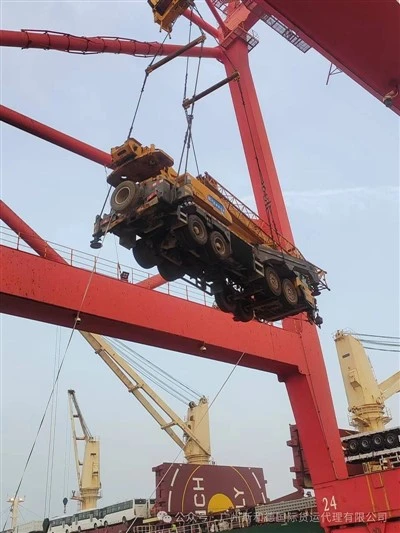
When you’re ready to stop just managing operations and start making them work for your business, reach out. We’ll walk through your current workflow, point out where standard ops are failing you, and show you how Oog can make a real difference.
Oog Operations References
- Supply Chain Operations Review Institute. (2023). Operational Adaptability in Volatile Markets: A Comparative Analysis of Standard and Dynamic Operational Frameworks.
- Global Field Operations Association. (2022). Hidden Costs of Rigid Task-First Operational Models for Mid-Sized and Enterprise Organizations.
- Industrial Tech Insights. (2024). Oog Operations: Design Principles for Dynamic, Outcome-Focused Workflows.
Speed Supply Chain (Guangzhou) Co., Limited
Speed Supply Chain (Guangzhou) Co., Limited is a licensed NVOCC and first-level freight forwarder in China. With a professional team, we deliver reliable, efficient and cost-effective oog operations service for global customers. If you have any enquiry about quotation, please feel free to email us.
Address: Room 2001-2002, Dongzhao Building, No. 515 Dongfeng Middle Road, Yuexiu District, Guangzhou, Guangdong, China
E-mail: mika.li@speedsucc.com
WebSite: https://www.speedsupplychain.com/
