If you’ve ever driven past a construction site, held a precision-tuned car door, or stared up at the curved metal panels of a modern skyscraper’s facade, you’ve interacted with the end result of sheet metal fabrication—even if you didn’t stop to name the process that brought that part to life. For decades, I’ve worked as a sheet metal fabrication supplier, guiding teams from aerospace engineers to HVAC contractors through the messy, precise, endlessly creative work of turning flat metal sheets into the parts that hold our world together. Let’s cut through the confusion (and the jargon) to break down what sheet metal fabrication actually is, how it works, and why it matters for almost every industry you can name. Sheet Metal Fabrication

First, let’s start with the basics that trip a lot of people up: sheet metal isn’t the same as thick steel plates or custom-cut metal blocks. The official industry line? It’s any metal that’s anywhere from 0.006 millimeters to 6 millimeters thick—thin enough to bend with manual force (for small, lightweight sheets) or rolled into smooth, consistent panels for large-scale projects, but tough enough to hold structural load when shaped correctly. Think of a soda can’s aluminum body (that’s thin sheet metal) or the steel panels on a warehouse roof (thicker sheet metal) versus a heavy-duty axle on a truck (that’s a forged or machined steel part, not sheet metal). That thinness is what makes fabrication possible—and what makes it such a versatile process.
So, what is sheet metal fabrication, exactly? At its core, it’s a group of manufacturing processes that transform flat metal sheets into custom parts or structures by cutting, bending, assembling, and finishing the material. It’s not a single step—it’s a workflow tailored to the exact needs of a part, and every choice you make in that workflow affects how the part performs, how much it costs, and how long it lasts. As a supplier, I spend most of my time walking customers through that workflow, because there’s no “one size fits all” here. A custom bracket for a medical device needs completely different steps than the aluminum panels for a rooftop solar installation, and I make sure my team adapts every process to match.
Let’s break down the most common steps in a typical sheet metal fabrication project, because seeing how it works makes it way less abstract. The first step, before any metal even touches a machine, is design. This is where customers bring us their CAD files (or their sketch on a napkin—we love those, too) and our engineering team checks if the part is actually fabricable. For example, a designer might draw a part with a bend that’s too tight for 3-millimeter steel, or a hole that’s too small for a punch to cut without cracking the metal. We flag those issues early, so no one wastes time or money trying to build something that can’t be built right. That’s one of the biggest mistakes new customers make: they assume a design from a 3D printer or a machined part will work for sheet metal, and we’re here to course-correct before it becomes a costly error.
Next comes cutting, the process of separating the flat sheet into the rough shape of the part. There are three main cutting methods we use regularly, each for different jobs. The first is shearing, which is like giant metal scissors—we use it for large, straight cuts on thick sheets when precision isn’t the top priority, like cutting down a full 4×8 foot steel sheet into smaller blanks for custom brackets. For precision work, though, laser cutting is our go-to. A high-powered laser beam burns, melts, or vaporizes metal along a programmed line, cutting holes, curves, and complex shapes with tolerances as tight as 0.1 millimeters—perfect for aerospace parts or small electronic enclosures. Then there’s plasma cutting, which uses a superheated jet of ionized gas to cut through thicker metal (up to 25 millimeters, depending on the machine) for projects like construction frames or agricultural equipment parts. Each method has its place, and as a supplier, I match the cutting method to the part’s needs, not the other way around.
Once the sheet is cut to shape, it’s time for bending—this is where flat becomes 3D, and it’s one of the most satisfying steps to watch. Bending uses force to reshape the metal along a straight line, and it’s done with a press brake, that huge machine with a V-shaped die and a top punch that presses the metal into the die. The key here is understanding the metal’s material properties: aluminum bends differently than steel, stainless steel is stiffer, and even the grade of steel (like mild steel vs. high-strength steel) changes how much force we need, and how we have to calculate the bend angle to get it right. For example, if you bend a 2-millimeter aluminum sheet at a 90-degree angle, you have to account for “springback”—the tendency of metal to spring back a little after pressure is released, so we program the press brake to bend a few degrees past 90 to get exactly 90 once the pressure is off. That’s the kind of nuance that makes good sheet metal fabrication different from just stamping out parts in a factory. For more complex bends, or parts with curved shapes (not just straight lines), we use roll bending or tube bending, depending on the part.
After bending comes assembling, where we put the individual cut and bent pieces together to make the final part. Assembly methods range from simple to complex, depending on the project. For small parts, spot welding—quick, localized welds that join two metal sheets together without melting the whole part—is common for things like appliance brackets. For parts that need to hold up to heavy load, like construction beams, we use MIG or TIG welding, which creates strong, continuous welds. We also use riveting for parts that need to be taken apart later, or adhesive bonding for thin aluminum parts where welding would distort the metal. If a part needs to attach to another component, we’ll add fasteners like screws or threaded inserts during assembly, so the customer can just bolt the part onto their product, no extra work needed.
The final step is finishing, and it’s easy to overlook, but it’s what makes the part last and look good. Finishing addresses two big things: protection from corrosion, and aesthetic or functional needs. For example, stainless steel parts for outdoor equipment might get a passivation treatment to remove contaminants and slow rust. Aluminum parts for medical devices often get an anodized coating, which hardens the surface and can be dyed any color we need. For parts that will be painted, we use powder coating—a dry powder applied with an electrostatic charge that melts and cures into a tough, even finish, way more durable than liquid paint. For parts that need to be shiny, like decorative metalwork, we might use polishing or chrome plating. No two finishing jobs are the same, and we work with each customer to pick the right one for their end use.
Now, you might be wondering why this matters—why not just use 3D printing or machined parts for everything? Let’s talk about the advantages of sheet metal fabrication that make it irreplaceable for most projects, especially for custom, medium-to-high volume parts. First, it’s cost-effective. Once you have the tooling for bends and cuts, sheet metal parts are faster to produce than many 3D printed or machined parts, especially for large runs. Second, it’s versatile. You can make parts as small as a penny (like a precision electrical contact) or as big as a 20-foot skyscraper panel, with materials ranging from thin aluminum for airplane wings to thick galvanized steel for industrial storage tanks. Third, it’s strong. Bending and cold working (the process of shaping metal at room temperature) actually makes sheet metal stronger than the original flat sheet—so a bent steel bracket is tougher than a flat bar of the same thickness, which is why it’s used for structural applications.
But sheet metal fabrication isn’t without its challenges, and that’s where a good supplier adds real value. For example, design for manufacturability (DFM) is huge. A customer might come to us with a perfect design on paper, but it could have bends that require specialized tooling, holes that are too close together, or tolerances that are tighter than the process can hold. As someone who’s been in this business for over 15 years, I’ve seen customers waste thousands of dollars trying to fabricate a part that’s not feasible, and my team’s job is to catch those issues before production starts. We also work with strict quality standards—for aerospace, we follow AS9100, for medical devices, ISO 13485, because those industries can’t afford a faulty part. I’ve had customers from the automotive industry tell me a faulty bracket could cause a safety recall, so we run every part through a 10-point inspection before it leaves our shop, measuring bend angles, checking weld strength, and verifying dimensions to make sure it’s exactly what they ordered.
Speaking of industries, sheet metal fabrication is the unsung backbone of almost every sector you can think of. If you’re in aerospace, it’s the aluminum panels for aircraft fuselages and the brackets that hold navigation systems. If you’re in construction, it’s the steel roof panels, window frames, and structural beams for office buildings and residential homes. If you’re in medical equipment, it’s the stainless steel enclosures for MRI machines, the brackets for surgical tables, and the parts that hold diagnostic tools together. Even the HVAC system that keeps your office comfortable is made of custom sheet metal ducts, and the solar panels on your rooftop have aluminum frames cut and bent through fabrication. When I first got into this business, I thought it was just “metal work,” but I quickly realized it’s how we build the infrastructure, products, and tools that modern life depends on.
For small businesses or startups, sheet metal fabrication is also a game-changer. A local food truck owner might need custom steel panels for their kitchen, a maker building a prototype for a new invention might need a small batch of custom brackets, and a small HVAC company might need ductwork tailored to a historic home. As a supplier, I work with businesses of all sizes, from global aerospace firms to one-person startups, because good sheet metal doesn’t discriminate based on project size. I’ve helped a small team of engineers build a prototype for a new electric scooter, and I’ve worked with a major construction company on a 10,000-square-foot project to build roof panels for a new stadium—both projects required the same attention to detail, just on different scales.
If you’re someone who’s ever needed a custom metal part for a project—whether it’s a small one-off prototype or a large production run—you know how frustrating it can be to find a supplier that communicates clearly, listens to your needs, and delivers parts that fit and work as promised. That’s why I started working in sheet metal fabrication in the first place: I saw too many people get burned by suppliers who overpromised, underdelivered, or didn’t explain why a design wouldn’t work. Today, my team and I pride ourselves on being transparent, walking every customer through every step of the process, and offering solutions that balance quality, cost, and lead time.
At the end of the day, sheet metal fabrication is more than just bending metal or cutting shapes. It’s a blend of art and science—understanding how metal behaves when you bend it, weld it, or coat it, and using that knowledge to turn an idea into something tangible that lasts. Whether you’re building a new product, renovating a space, or designing something for the next big industry, sheet metal fabrication is how you get from a sketch on paper to a part you can hold.
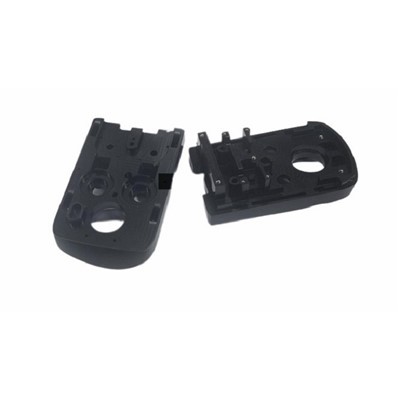
If you’re ready to talk about your next sheet metal project, whether it’s a small custom part or a large production run, we’d love to hear from you. Our team of engineers and fabricators can work with your design, help optimize it for cost and functionality, and deliver high-quality parts on time. Reach out to start a conversation about your needs.
CNC Metal Machining References:
- Groover, M. P. (2020). Fundamentals of Modern Manufacturing: Materials, Processes, and Systems. Wiley.
- Chapman, W. A. (2018). Sheet Metal Fabrication Handbook. Industrial Press.
- American Society of Mechanical Engineers (ASME). (2021). B106.1M-2021: Sheet Metal Fabrication Tolerances. ASME International.
Mid (Dongguan) Intelligent Manufacturing Co., Ltd.
Mid (Dongguan) Intelligent Manufacturing Co., Ltd. is one of the leading sheet metal fabrication manufacturers and suppliers in China. We warmly welcome you to buy sheet metal fabrication for sale here from our factory. All customized products are with high quality and competitive price. Contact us for quotation and free sample.
Address: No.22, Jiaoping Road, Tangxia Town, Dongguan City, Guangdong, China
E-mail: bruce_qin@bishenprecision.com
WebSite: https://www.bishenprecision.com/
