If you’ve ever walked through a manufacturing, distribution, or e-commerce warehouse, you’ve probably seen a palletizing robot in action—moving stacks of boxes, bags, or containers with steady, precise speed, far faster than even the most experienced human palletizer. I’m a palletizing robot supplier who’s spent the last 12 years troubleshooting, upgrading, and customizing these systems for facilities ranging from small craft beverage producers to Fortune 500 consumer goods brands, and one question I get asked more than any other is: “What’s the maximum number of pallets a palletizing robot can handle per hour?” Palletizing Robot
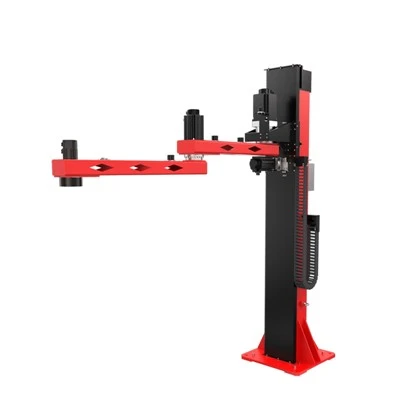
The short answer isn’t a single number. It depends on a dozen interconnected factors that go way beyond the robot’s brand or model. Let’s break this down, because if you’re investing in a palletizing system, guessing the throughput without accounting for these variables will leave you with a solution that’s either underperforming your needs or overbudget for tasks you don’t have to complete in half the time.
First, let’s start with what “pallet per hour” actually means, because there’s a lot of ambiguity here. A full pallet isn’t just a stack of boxes; it’s a set of SKUs, packaging types, and weights that define how a robot picks, moves, and places items. For example, a pallet of 12oz craft beer cans weighs around 30 pounds total, while a pallet of 50lb dog food bags weighs 1,200 pounds. A robot moving lightweight, uniform cans can cycle far faster than one handling irregular, heavy bags that require more careful placement to avoid tears or stack instability.
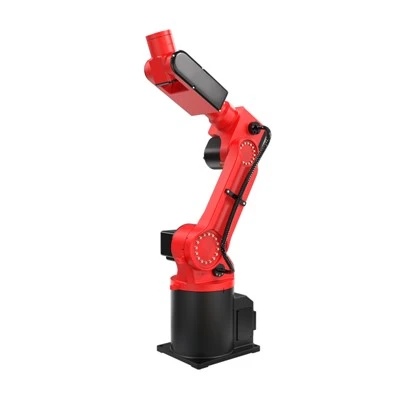
Then there’s the type of palletizing robot itself. The three most common models I supply are robotic arm (articulated) robots, gantry robots, and collaborative (cobot) palletizers, each with a different throughput ceiling. Articulated robots, with six axes of movement, are the workhorses for most mid-sized operations: they can reach 80 inches high for stacking pallets, move at 1–2 meters per second, and handle payloads from 10 pounds to 2,000 pounds. Gantry robots, which are mounted on a track and move linearly across a large workspace, can handle even heavier loads and cover more area, making them ideal for high-volume distribution centers. Cobots, designed to work alongside humans, have lower speed and payload limits, topping out around 6–8 pallets per hour for light goods.
But here’s the catch: even the fastest articulated robot can’t hit its theoretical maximum throughput if your upstream and downstream systems can’t keep up. A robot waits for items to pick, so if your conveyor line can only deliver 20 cases per minute, the robot will never move faster than that. I once worked with a small snack food company that installed a $150,000 high-speed palletizing robot, only to see it hit just 10 pallets per hour instead of the advertised 25. The problem? Their upstream case erector and filler couldn’t keep pace, so the robot spent 60% of its time idle waiting for product. That’s a mistake I help clients avoid early on: throughput is a system number, not just a robot number. It’s not just how fast the robot moves—it’s how well it integrates with your entire line.
Now, let’s talk about the real maximum throughput I’ve documented for clients across industries, because these are the numbers that matter for actual operations. For uniform, lightweight items like canned goods or bottled water, with a well-integrated upstream line, a standard 6-axis articulated robot can hit 28–32 pallets per hour. That means a full pallet of 50 cases, each case moving at 25 cases per minute, is picked, stacked, and placed in 1.8–2.1 minutes per pallet. For heavier, more stable items like corrugated boxes of non-perishables, that number drops to 20–25 pallets per hour, because the robot has to be more careful with the weight distribution to prevent stack collapse. For irregular items like bulk bags or crates with odd shapes, throughput falls even further, to 12–18 pallets per hour, because each pick requires more precision and slower movement to avoid damaging the product.
But let’s get to the extremes, because I’ve seen operations push these numbers when it makes sense. In 2021, I worked with a national beverage distributor that needed to handle 1,200 pallets per week (a 24/7 operation) to meet holiday demand. We paired a high-speed articulated robot with a custom dual pick-and-place end-of-arm tooling (EOAT) that could grab two cases at once, plus upgraded their conveyor system to reduce wait time. The result? They hit 35 pallets per hour, a number that seemed impossible when we first started planning. But that required three customizations: the dual EOAT, a maintenance schedule to keep the robot running 99% of the time (no unplanned downtime), and a dedicated operator to handle any minor issues with the line. On the flip side, I’ve seen small businesses with just one shift, 10 pallets a week of craft goods, use a standard 6-axis robot at 10–12 pallets per hour, which is more than enough for their needs and saves them money they’d waste on overcapacity.
What are the factors that can drag throughput down, even if you have a top-tier robot? First, product variation. If you have 10 different SKUs, each with a different case size or shape, the robot has to be reprogrammed every time it switches products, which adds downtime. For a client with 20 SKUs, that can add 2–3 hours of downtime per day, cutting throughput by 15–20%. Second, end-of-arm tooling. A generic EOAT that can handle all types of products is less efficient than a custom tool for your specific goods. For example, a vacuum gripper works great for flat cases but can’t handle irregular bags, forcing the robot to use a slower mechanical gripper. Third, maintenance. A robot that’s not cleaned, lubricated, or calibrated regularly will slow down over time. I’ve seen robots that hit 30 pallets per hour when new drop to 18 after a year of no maintenance, because worn gears and misaligned axes reduce speed and precision. Finally, safety protocols. Many facilities require robots to slow down when human workers are in the area, a rule that’s non-negotiable but can cut throughput by 10–15% in areas where workers need to load pallets or troubleshoot.
So how do you find the right number for your operation? It starts with mapping your current needs, not what you think you “should” have. Let’s say you process 5,000 cases a day, 5 days a week. A standard pallet holds 50 cases, so that’s 100 pallets a week, or 20 pallets per day. If your line runs one 8-hour shift, that’s 2.5 pallets per hour. Even the slowest palletizing robot can hit that, and you don’t need to invest in a high-speed system that costs twice as much. If you need 1,000 pallets a week, running two 10-hour shifts, that’s 10 pallets per hour—still a mid-range robot, with potential to scale up if you add a third shift next year. If you’re a high-volume operation with 5,000 pallets a week, 24/7, that’s 35 pallets per hour, requiring the high-speed system we built for the beverage distributor.
I also want to address a common myth: more throughput always means better value. When a client comes to me asking for “maximum pallets per hour,” I don’t just quote the fastest system. I explain that paying for 30 pallets per hour when you only need 10 wastes capital that could be spent on better product quality or marketing. Conversely, investing in a system that can’t scale when your business grows means you’ll be replacing it in 3–5 years, instead of using it for 10. For example, a small e-commerce client I worked with in 2019 started with 10 pallets a week, using a robot that hit 12 pallets per hour. Last year, they grew to 100 pallets a week, and that same robot, with a minor conveyor upgrade and a custom EOAT, now hits 22 pallets per hour—saving them $80,000 in replacement costs.
At the end of the day, the maximum number of pallets a palletizing robot can handle per hour is a custom calculation, not a one-size-fits-all spec. It’s about aligning the robot’s capacity with your product, your line, your shift schedule, and your growth goals. If you’re in the market for a palletizing system, don’t get hung up on the “max pallets per hour” number in a sales brochure. Ask the supplier to walk you through how their systems have performed for other clients with similar product and throughput needs, and ask them to account for your upstream and downstream lines. That’s how you avoid the mistake of buying a robot that’s either too slow or too fast for your business.
If you’re ready to map your specific needs and find a palletizing solution that fits your operations, I’m here to walk through your current line, your product types, and your throughput goals to give you a realistic estimate of what’s possible. No generic quotes, no overpromised numbers—just data from 12 years of working with facilities just like yours.
Palletizing Robot References
- Material Handling Industry of America. (2022). Palletizing System Throughput Benchmark Report. MHI.
- Robotics Industries Association. (2021). Industrial Robot Payload and Speed Guidelines for Packaging Applications. RIA.
- Modern Materials Handling. (2023). “The Hidden Factors That Impact Palletizing Robot Throughput.” Penton Media.
- International Society of Automation. (2022). Integrating Robotic Palletizers with Existing Conveyor Systems. ISA.
Robotic Technology (GD) Co., Ltd.
Robotic Technology (GD) Co., Ltd. is one of the most experienced palletizing robot manufacturers and suppliers in China, also supports custom service and one year warranty. Please feel free to wholesale CE approved palletizing robot for sale here from our factory. Contact us for quotation.
Address: Room 102, No. 30,Hengfeng 2nd Road,Daguo, Changping Town, Dongguan City,Guangdong,China
E-mail: admin@iroboticplus.com
WebSite: https://www.rb-tic.com/
