Alright, let’s cut to the chase. If you’re running a CNG refueling station or buying equipment for one, you might be asking, “Wait, why does the communication network matter that much?” I get it—when you’re focused on compressors, dispensers, storage tanks, and safety gear, networking feels like an afterthought. But here’s the thing: I’ve been in the CNG refueling station equipment supply game for 8 years, and I’ve seen firsthand how a wonky comms network will tank your profits, trigger costly shutdowns, and even throw safety red flags. Let’s break down exactly what we (as your equipment provider) build into every system, and what you need to demand so you don’t end up stuck with a glitchy setup. CNG Refueling Station Equipment

First, let’s start with the non-negotiables for safety—because in CNG, safety isn’t a “nice to have.” CNG is compressed natural gas, which is highly flammable, so every piece of equipment has to talk to each other in real time, no lag. For example, if a leak sensor on a storage tank picks up a tiny 0.1% gas buildup, that signal has to reach the station’s safety PLC (programmable logic controller) in less than 100 milliseconds. If it takes longer? The PLC might miss the alert, and before you know it, you’re dealing with a false alarm or worse. I’ve had a client in Ohio tell me a competitor skipped this spec, and their leak sensor signal took 2 seconds to send—they had to call the fire department over a minor leak that could’ve been contained, costing them $12k in fines and lost sales that weekend. So real-time latency is a hard requirement, not a “maybe.”
Next up: redundancy, especially for your core comms gear. Your station runs 24/7, 365 days a year—no closing for “network updates” here. So we never install a single comms router or switch. We build dual redundant systems: if one router fails, the secondary kicks in automatically, no downtime, no manual reboot. We also use both wired (Ethernet) and cellular backups, because let’s be real—local power outages or a cell tower dead zone can’t take your comms down. A client in a rural part of Pennsylvania tried skipping cellular backup last winter; a heavy snow took out their landline line, and their station couldn’t send dispenser data to the back office, so they couldn’t track sales for 18 hours. They lost $8k that day just because they cut corners on redundancy.
Then there’s interoperability, which is a big one. Most stations don’t run just one brand of equipment—you might have a compressor from us, dispensers from another vendor, and a tank monitor from a third. If your comms network can’t make all these toys talk to each other, you’re stuck with siloed data: the compressor says it’s using 1000 cubic feet of gas, the dispenser says it’s sold 800, and you have no clue where the other 200 went. That leads to inventory discrepancies, lost revenue, and hours of manual data entry. So we build our comms systems to use standard protocols like Modbus RTU/TCP and DNP3—these are universal, so they play nice with almost every piece of CNG gear out there. No custom hacks, no extra costs to integrate later. I see way too many stations that buy cheap gear from random sellers, and end up spending 2x the purchase price to get all the components talking. Don’t be that guy.
Now, let’s talk about security—this is huge, and most station operators sleep on this. Your comms network is a target for cyberattacks, and a breach can be catastrophic. A hacker could remotely disable your safety systems, manipulate dispenser sales data, or even trigger a compressor overload. So we encrypt every data transfer with TLS 1.3, and we use role-based access control (RBAC) so only authorized people—like station managers or techs—can adjust settings. No generic admin passwords, no open ports that hackers can scan. We also run monthly vulnerability scans on the network, which is a standard practice we include in our service packages. Last year, a client in Texas got a phishing email that tried to hack into their old unencrypted comms network—they caught it, but it shut down their dispensers for 6 hours. We retrofitted their network with our secure system for half the cost of their lost sales that day. Security isn’t a sales pitch; it’s a requirement.
Scalability is another must-have, because you might want to expand your station down the line. Maybe add more dispensers, or a CNG to LNG conversion, or even connect to a remote fueling hub. If your comms network is maxed out on ports or bandwidth right now, adding new gear will mean pulling all new wires, paying for extra router upgrades, and shutting down the station for days. We design our networks with extra bandwidth (we size for 2x your current needs) and spare ports, so when you’re ready to expand, we just plug the new equipment in—no downtime, no extra costs. I had a client in Florida who wanted to add 4 more dispensers 2 years after install; with our scalable network, it took 4 hours of after-hours work, and they were back up running the next morning. If we’d installed a network sized for their initial 2 dispensers, they would’ve had to shut down for 3 days and pay $25k in lost revenue.
Wait, let’s not forget about remote monitoring and control. Modern CNG stations aren’t just stand-alone—operators want to check on their station from home, or from a corporate office, or even on a road trip. Our comms network lets you do that: you can check compressor run time, monitor tank pressure, adjust dispenser settings, and even troubleshoot minor issues remotely. No more sending a tech out at 2 a.m. because a dispenser is stuck. Last month, a client in Georgia had a dispenser that was undercounting fuel—our comms network let us log in remotely, adjust the calibration, and have it fixed in 10 minutes, instead of a $120 service call and 2 hours of downtime. That’s the kind of ROI a good comms network delivers.
Also, environmental toughness—your network gear is going to be installed outside, right? Either on a wall near the dispensers, in a shelter near the compressor, or in a control room that might get dusty, hot, or cold. So we only use gear rated for NEMA 4X or IP65, which means it’s dust-tight, water-resistant, and can handle temperatures from -40°F to 140°F. I’ve seen cheap network switches installed outside that fried in a summer heatwave—cost a station in Arizona $18k in lost sales while they waited for a replacement. Our gear is built to survive the worst weather, no exceptions.
Let’s wrap this up with what this all means for you, the operator. If you’re buying CNG refueling station equipment, don’t just look at the price of the compressor or the dispenser. Ask about the communication network specs: latency under 100ms, dual redundant wired/cellular, standard protocols, end-to-end encryption, scalable bandwidth, NEMA-rated gear, and remote monitoring. Skip the vendors that skip these—they’ll cost you more in fines, downtime, and lost revenue than you’ll save upfront.
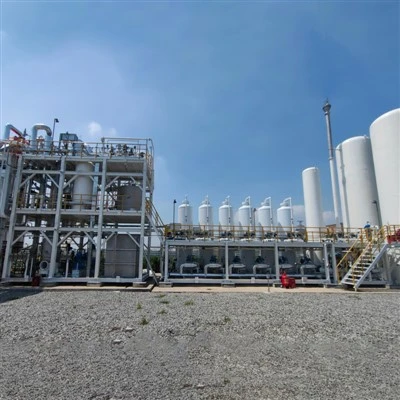
We’ve been supplying CNG equipment for years, and we build every system with these exact requirements baked in. No fine print, no hidden fees, just a comms network that works as hard as your station does. If you’re ready to upgrade your current setup or equip a new station, hit us up to chat through your needs—we’ll walk you through every spec, no salesy jargon, just real advice from people who work in the trenches every day.
Gas Station Management System References
- Compressed Natural Gas (CNG) Refueling Station Safety Standards, National Fire Protection Association (NFPA) 52
- Communication Protocols for Industrial Energy Systems, International Society of Automation (ISA) 95
- Cyber Security Requirements for Industrial Control Systems, U.S. Department of Homeland Security (DHS) Industrial Control Systems Cyber Emergency Response Team (ICS-CERT)
Chengdu Hi-tech Panda Energy Technology Co., Ltd.
With abundant experience, we are one of the most professional CNG refueling station equipment manufacturers in China. Please feel free to buy high quality CNG refueling station equipment for sale here from our factory. Also, customized service is available.
Address: No.1604, 16th Floor, Unit 2, Building 1, No.1700, North Section of Tianfu Avenue, Chengdu High-tech Zone, China (Sichuan) Pilot Free Trade Zone
E-mail: Haikepanda-sos@aliyun.com
WebSite: https://www.haike-energe.com/
