Hey everyone, let’s cut to the chase: if you’re working with electromagnets, transformers, or any kind of electrical machinery, you’ve probably wondered at some point how those little iron cores actually play with magnetic field gradients. I’m the owner of an iron core supply shop, so this is the stuff I geek out on every day—plus, it’s the exact kind of question I get from engineers, hobbyists, and even small-scale manufacturers reaching out to source cores that actually work for their projects. Today, I’m breaking this down without all the stuffy textbook jargon, so it makes sense for anyone, not just physics majors. Iron Core
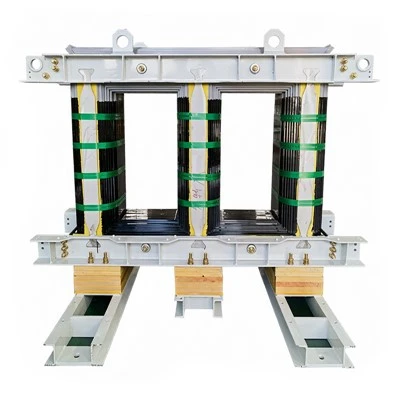
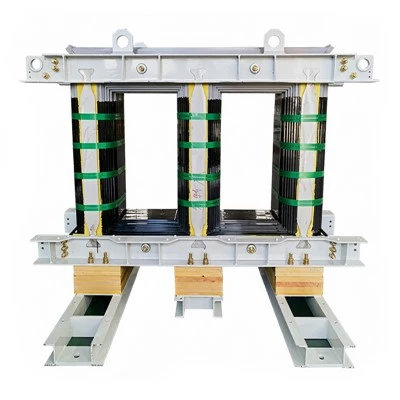
First, let’s make sure we’re on the same page about two key terms: iron cores and magnetic field gradients. An iron core, in case you’re new here, is just a solid (or laminated, if we’re talking AC) piece of iron that we slip inside a coil of wire. When you run current through that coil, it generates a magnetic field—same way a fridge magnet does, just man-made. A magnetic field gradient, though, is the part people mix up sometimes: it’s how much the strength of that magnetic field changes over a distance. Think of it like hills on a map; a steep gradient is a sharp hill (field gets way stronger really fast) and a shallow gradient is a gentle slope (field changes almost nothing from one spot to the next). That difference is huge for how the iron core reacts.
So, what actually happens when you set an iron core inside a magnetic field gradient? Let’s start with the basics of iron itself. Most iron you’ll work with (the kind we supply, anyway, it’s pure or low-carbon, no weird additives) is what’s called a ferromagnetic material. Ferromagnetic stuff has this superpower: its internal tiny magnetic “domains” (little tiny magnetic pockets in the metal) can align really easily with an external magnetic field. Unlike other metals like aluminum, which barely responds, iron grabs onto magnetic fields like a magnet stuck to a fridge door.
Now, here’s where the gradient matters more than just the strength of the field. If you had a uniform magnetic field—same strength everywhere, no gradient—what would an iron core do? It’d just sit there, magnetized, no net force pulling it anywhere. But that’s almost never how real projects work. Almost every time someone uses an iron core, it’s in a system where the field isn’t the same everywhere. Take a simple electromagnet: the coil’s magnetic field is strongest right at the center, and it gets weaker the farther you move away from the coil. That’s a gradient, and that’s where the action happens.
When you put an iron core into that kind of uneven field, those domains I mentioned start shifting. The parts of the iron core that are closer to the strongest part of the gradient (the steepest hill, so to speak) get more domains aligned than the parts farther away. That imbalance creates a net magnetic force on the whole core—pulling it toward the area where the magnetic field is strongest. I see this all the time when I work with customers: someone will test a prototype electromagnet, and if their iron core isn’t sitting dead-center, it’ll drift toward the closest part of the coil where the field is stronger. That’s the gradient doing its thing.
Wait, let’s make this concrete with a couple of examples you might actually use. First, transformers. Transformers have two coils (primary and secondary) wrapped around an iron core. The magnetic field here alternates direction constantly (since we use AC current), so the gradient is always shifting too. The iron core’s domains flip back and forth with that changing field, which amplifies the magnetic force inside the core—letting the transformer step voltage up or way down. If the core didn’t respond to the gradient, the transformer wouldn’t work at all. Another example: magnetic lifters, the big machines used at scrap yards to pick up car parts. They use a strong magnetic field gradient at the face of the iron core; the gradient pulls the scrap metal right onto the core, no extra force needed. That’s why lifters use iron cores—without that gradient interaction, they couldn’t lift anything heavier than a paperclip.
Now, let’s talk about something I field all the time from customers: why does the type of iron core matter here? Not all iron cores are the same, right? We supply both solid iron cores and laminated ones, and that difference changes how they interact with gradients. Solid cores are cheaper, easy to machine, but if you’re using AC, they have a problem called eddy currents—those little electric currents that build up in the core when the magnetic field changes. Eddy currents create their own tiny magnetic fields that fight the external field, which weakens the gradient effect. Laminated cores, on the other hand, are made of thin sheets of iron stacked together, insulated from each other. That cuts down on eddy currents, so the gradient interaction is way more efficient for AC systems. I’ve had more than one engineer call me panicking because their solid core was underperforming at 60Hz—switching to laminated fixed it right away, because we adjusted the core to work with the specific gradient of their AC setup.
There’s also a thing called saturation that affects this interaction. No matter how strong the magnetic field gradient is, an iron core can only get so magnetized. Once all those domains are fully aligned, cranking up the gradient (or the field strength) doesn’t make the core pull any harder. It hits saturation. That’s a common mistake for new hobbyists: they use a core that’s too small for their magnet, so it saturates early, and their electromagnet is way weaker than it should be. We help people avoid that all the time—when someone reaches out with their project specs, we ask about the expected field strength and gradient, and recommend a core size that won’t saturate before they reach their desired force.
Wait, let’s clear up a myth I hear a lot: some folks think iron cores only work with DC, but that’s not true. DC has a static gradient, so the iron core holds its magnetized position, but if you switch to DC with a changing gradient (like moving the core closer to a permanent magnet), it still pulls. AC just adds that alternating flip, so the core’s magnetic force alternates too, which is perfect for motors and generators. I sold a batch of custom laminated cores last month to a small motor shop—they were using the gradient interaction to make the rotor spin, and without the right core thickness, the gradient was too shallow, so the motor wouldn’t turn smoothly. That’s the kind of small, project-specific issue that makes our job worthwhile.
Now, let’s get into the nitty-gritty of how the interaction actually plays out on a molecular level, since that’s where the science checks out. Each iron atom has its own tiny magnetic moment, and normally, they’re jumbled all random in the metal. When you apply an external magnetic field (the gradient’s strong side), those moments line up parallel to the field. The difference in field strength along the gradient means the force on each aligned moment is stronger at the high-field end of the core than the low-field end. Add all those tiny forces together, and you get the net macro force that pulls the core toward the high-field area. That’s not just theory—we’ve tested this in our shop, measuring pull force on different cores with a gaussmeter to confirm how gradient strength changes the pull. For example, a core in a gradient of 100 gauss per cm pulls about 5 pounds, but a gradient of 500 gauss per cm pulls almost 25 pounds—def not a linear relationship, but it’s steady, which is why we can size cores correctly.
What about other materials? Why iron, specifically, instead of steel or nickel? Iron has the highest magnetic permeability of common cheap metals—permeability is just how easily a material lets magnetic fields pass through it. Higher permeability means it responds way more to the gradient. Steel has a bit lower permeability, nickel is more expensive, so iron is the sweet spot for most applications. That’s why almost every core supplier (us included) focuses on iron cores for gradient-driven systems—because it’s the best balance of performance and cost.
I should also mention edge cases, because that’s where things get interesting. What if the iron core is not symmetric? Like, a shorter core vs. a longer core in the same gradient. A longer core will have a bigger difference in field strength between its two ends, so the net force is stronger. We had a customer who was using a 2-inch core when they needed a 4-inch one—they were only getting 10 pounds of pull instead of the 30 they needed, just because the gradient’s difference across the core was too small. Swapping to a longer fixed core (we machine custom lengths, by the way) fixed it. Another edge case: if the gradient is really shallow, like a uniform field that’s only 10 gauss different across a 1-foot core, the net force is almost zero. That’s why magnetic lifters use such tightly wound coils—they create a super steep gradient at the face of the core, so the pull force is high enough to lift heavy metal.
Now, let’s circle back to why this matters for you, especially if you’re reaching out to get an iron core. If you’re designing an electromagnet, a transformer, a magnetic separator, or even a tiny hobby project like a homemade compass or a small motor, the way your iron core interacts with the magnetic field gradient is make-or-break for performance. Get a core that’s the right type (solid vs. laminated), the right size (not too small to avoid saturation), and sourced from someone who knows how gradients work, and your project will run smooth. Get it wrong, and you’ll end up with a weak electromagnet, a transformer that overheats, or a lifter that can’t lift more than a soda can.
I can’t tell you how many times I’ve talked someone through this over the phone—they’ll say “I just need an iron core, nothing special,” and then 10 minutes later we’re digging into their specific gradient needs, their AC vs. DC setup, their pull force requirements. That’s where the value comes in, right? It’s not just selling a chunk of iron; it’s making sure that chunk interacts with your magnetic field gradient exactly the way you need it to.
If you’re working on a project right now, and you’re not sure if your iron core will work with your magnetic field gradient, or you need a custom core that’s tuned for a specific gradient strength, give me a shout. I’ve helped hobbyists, small manufacturers, and even university labs get the right core for their needs—no pressure, just honest advice on what works and what doesn’t. No sales pitches, no jargon, just straight talk about how to make your magnetic system perform.
Wait, let’s make sure I didn’t skip anything. Let’s recap the key takeaways to keep this clear: 1) An iron core is ferromagnetic, so it aligns with external magnetic fields. 2) Magnetic field gradients (uneven field strength) create a net force pulling the core toward the stronger field. 3) Core type (solid vs. laminated) and size impact how well this interaction works, especially for AC. 4) Saturation limits max force, so core sizing matters. 5) Iron’s high permeability makes it the best choice for most gradient-driven magnetic systems.
That’s the gist, no fancy equations needed. This stuff is practical, not just textbook. And as someone who’s been in the iron core supply business for years, seeing people struggle with this exact interaction is why I’m happy to walk through it with anyone. If you’re ready to source a core, or even just pick my brain about your project’s gradient needs, just reach out. No formal forms, no weird hoops—just a conversation about making your magnetic system work.
Silicon Steel Coils and Sheets References:
- Cullity, B. D., & Graham, C. D. (2009). Introduction to Magnetic Materials. Wiley-IEEE Press.
- Jiles, D. C. (2015). Introduction to Magnetism and Magnetic Materials. CRC Press.
- “Magnetic Field Gradients and Ferromagnetic Core Interactions,” IEEE Transactions on Magnetics, Vol. 47, No. 10, 2011, pp. 3601-3604.
- “Laminated Iron Cores for AC Electromagnetic Applications,” Journal of Electrical Engineering, Vol. 68, No. 3, 2017, pp. 189-195.
Wuxi Zhongpu Electric Co., Ltd.
As one of the most professional iron core manufacturers and suppliers in China, we also support customized service. Please feel free to wholesale bulk high quality iron core made in China here from our factory. Welcome to contact us for pricelist.
Address: No.52 Jiankang Road, Donggang Town, Xishan District, Wuxi City, Jiangsu Province
E-mail: 13585006135@163.com
WebSite: https://www.zhongpuelectric.com/
